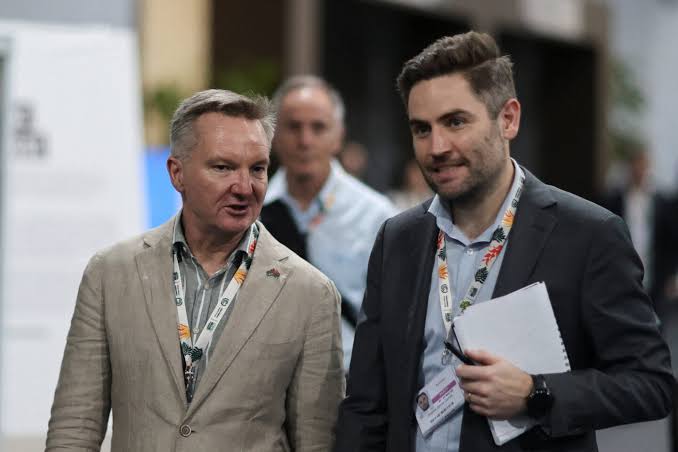
Australian Climate and Energy Minister Chris Bowen has begun his most difficult diplomatic assignment as president of negotiations at COP31 in Türkiye. His authority to shape the summit agenda comes with a contradiction: Australia presents itself as a Pacific climate partner while earning heavily from fossil-fuel exports.
The role emerged from last year's deadlock over hosting rights. Türkiye retained the summit venue, Australia gained responsibility for the negotiating agenda and Pacific pre-COP meetings were held in Fiji and Tuvalu. Bowen must now make an unprecedented power-sharing arrangement work under pressure for tangible results.
COP31 is being described as an implementation summit. Australia and Türkiye want support for a “35 by 35” target under which electricity would supply 35 per cent of consumer energy by 2035, alongside efforts to slow waste growth and reduce energy intensity in buildings.
Bowen also wants wealthy states to increase climate finance, particularly for small island countries facing damage and disruption. He has reaffirmed the Paris target of limiting warming to 1.5 degrees Celsius while acknowledging that a temporary overshoot is increasingly likely.
Pacific advocacy is inseparable from strategy. Canberra is concerned about China's influence in nearby island states, and stronger climate leadership can reinforce Australia's regional position. Yet Pacific governments will judge credibility through finance and fossil-fuel policy rather than geopolitical language.
Australia joined the voluntary Belém agreement to accelerate the phase-out of coal, oil and gas, but it and Türkiye have resisted a COP31 timetable. Australian exports generate emissions overseas that do not count toward national targets, allowing domestic progress to coexist with global fossil-fuel expansion.
Bowen must therefore reconcile four constituencies: Türkiye as co-manager, vulnerable Pacific states, countries seeking agreement and Australian exporters. His success will depend on whether finance and electrification commitments survive negotiations and whether Australia accepts scrutiny of the emissions embedded in its trade.