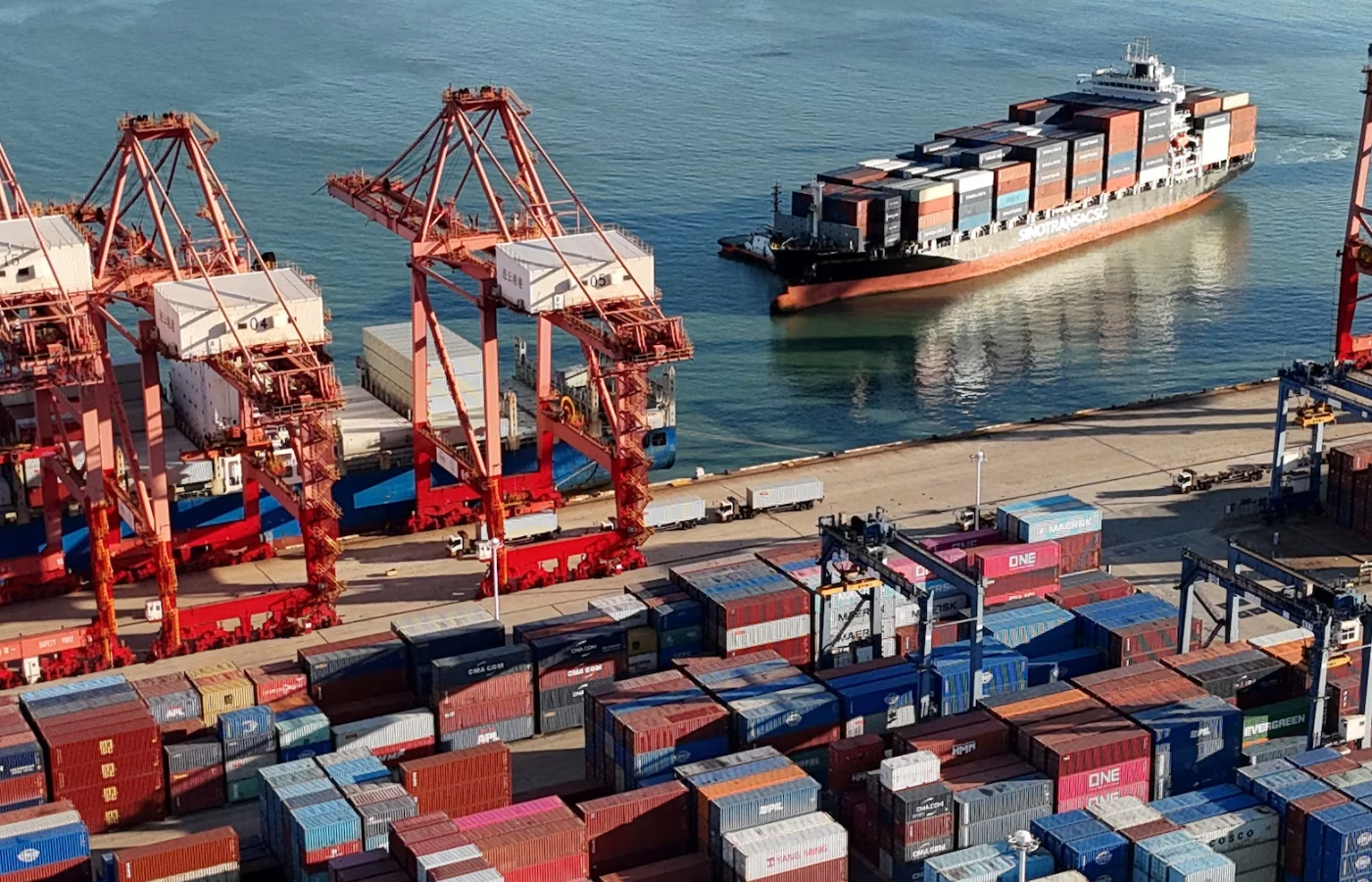
China's trade surplus reached $1.04 trillion in the first ten months of 2026 as global investment in artificial-intelligence infrastructure accelerated demand for technology exports. The threshold arrived one month earlier than last year, deepening the economy's reliance on foreign buyers while domestic demand remains weak.
Exports rose 35.2 per cent from a year earlier in October, slightly below September but above the 33.5 per cent forecast. Imports increased 41.6 per cent, also beating expectations, while the monthly surplus with the United States eased to $32.71 billion.
High-technology shipments supplied much of the momentum. Semiconductor exports increased 111.1 per cent in dollar terms during the first ten months, and overall high-tech product exports rose 47.9 per cent as data centres and AI developers competed for hardware.
Joe Peissel of Trivium China warned that additional tariffs and other barriers would remain a significant risk in 2027 as Chinese manufacturers expanded abroad. The European Union is already preparing limits on Chinese hybrid-vehicle exports, encouraging factories to advance shipments before restrictions begin.
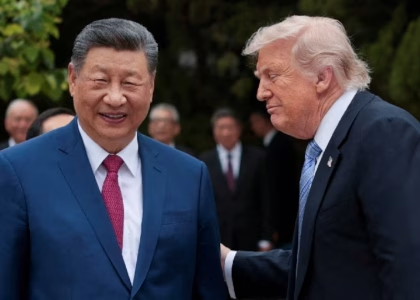
Beijing and Washington extended their tariff truce by two months, but China linked more purchases of American farm products to reciprocal tariff reductions. Presidents Xi Jinping and Donald Trump are expected to meet at next week's APEC summit in Shenzhen with the imbalance unresolved.
The export strength masks domestic fragility. A prolonged property downturn has reduced household wealth and confidence, and Chinese vehicle sales have declined for twelve consecutive months even as carmakers rely more heavily on overseas markets.
The central question is how long the AI investment cycle lasts. Strong global demand can support growth into 2027, but a slowdown or protectionist response would expose the weakness of consumption at home. China's surplus is therefore both an achievement and a measure of economic imbalance.