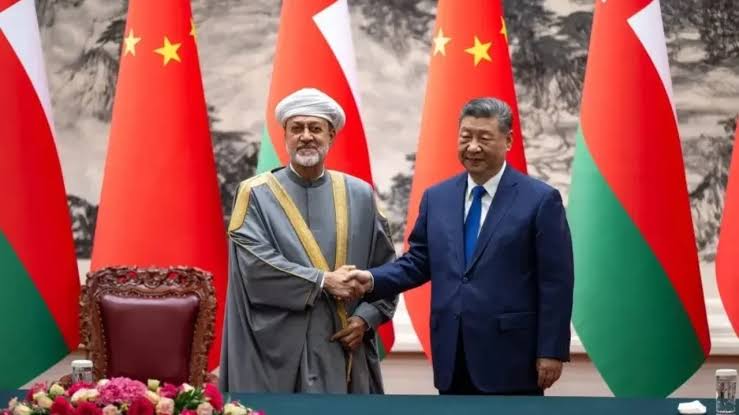
The People's Bank of China and the Central Bank of Oman have signed a bilateral currency swap worth 30 billion yuan, equivalent to about $4.47 billion or 1.5 billion Omani rials. The agreement will remain in force for five years and creates a formal liquidity channel between the two monetary systems.
A swap allows each central bank to exchange its currency for the other's and provide those funds to domestic financial institutions when needed. In practical terms, Chinese and Omani companies can settle more trade without first obtaining dollars, reducing conversion costs and exposure to shortages in a third currency.
The central banks also signed a memorandum on digital payments and central bank digital currencies. That component extends the relationship beyond emergency liquidity toward the infrastructure used to move money across borders, where speed, standards, cybersecurity and legal recognition are decisive.
For Beijing, the agreement supports the gradual international use of the yuan through a partner positioned on major Gulf energy and shipping routes. China has built a network of bilateral swaps that can sustain trade settlement while preserving its managed approach to capital flows and exchange-rate policy.
For Oman, access to yuan liquidity can facilitate commerce with one of Asia's largest markets and diversify financial links. It may also support companies dealing with Chinese suppliers or buyers when dollar funding becomes more expensive, although the existence of a swap does not guarantee that firms will use it at scale.
The two institutions said the agreements would deepen monetary cooperation, make cross-border digital payments more convenient and support financial stability. Those objectives require further technical work on eligible transactions, banking access, data rules and the conditions under which either central bank activates the swap.
The agreement is therefore an enabling framework rather than a replacement for existing currency markets. Its importance will be measured by actual settlement volumes, participation by commercial banks and whether digital-payment cooperation produces interoperable systems instead of remaining at the memorandum stage.