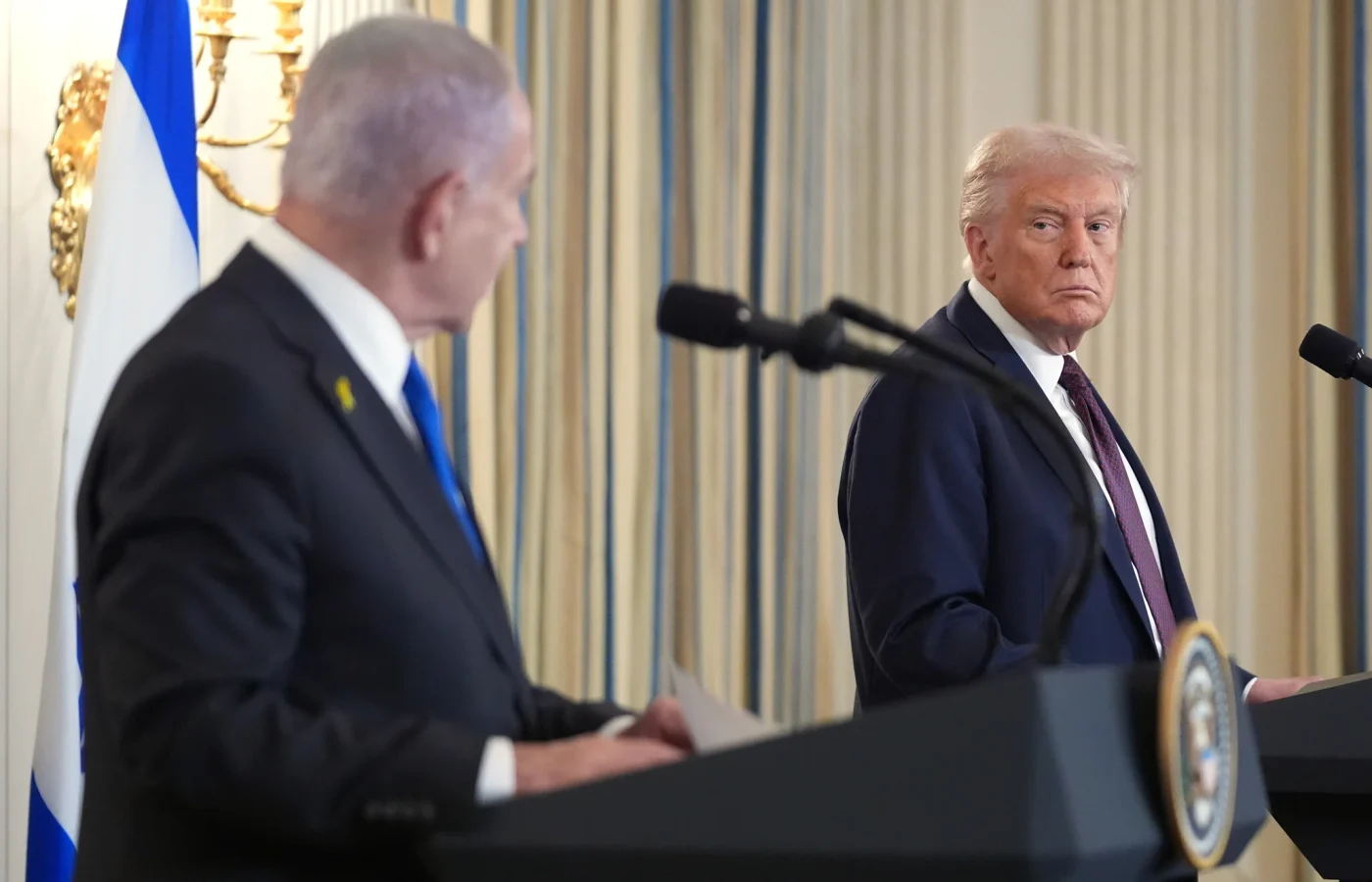
President Donald Trump said the United States would stop providing Israel with roughly $4 billion in annual assistance beginning in 2027, while continuing to sell it weapons. He said Prime Minister Benjamin Netanyahu had approached him about the change and argued that Israel no longer needed direct American support.
The announcement would alter the most visible financial pillar of the alliance. A 2016 agreement negotiated under Barack Obama committed Washington to $38 billion over ten years, including about $3.8 billion annually, through 2028. Congress controls appropriations, so the executive branch cannot simply erase every remaining obligation.
Most of the assistance is Foreign Military Financing that Israel uses to buy American weapons. Ending or reducing it would affect not only Israeli procurement but also US defence contractors with multiyear production schedules, while deliveries already under contract could continue long after budget support changes.
Netanyahu did not immediately respond, although he told The Economist in January that he favoured a gradual ten-year phaseout. Israeli opposition figures Gadi Eisenkot and Yair Golan criticised the abrupt proposal, warning that it could increase costs and create new uncertainty around long-term military planning.
Officials have discussed replacing traditional grants with a defence-technology partnership focused on co-development, research and commercial sales. A provision in the 2027 US defence authorization bill points in that direction, but it has not completed the legislative process and leaves unresolved disputes over intellectual property and control of jointly developed systems.
The political argument extends beyond budgets. Trump linked the decision to domestic criticism of aid, including pressure from figures such as Tucker Carlson, while Democratic lawmaker Ro Khanna has argued that unconditional support limits both American oversight and Israeli strategic independence.
A transition will therefore be slower and more complex than the headline suggests. Washington must reconcile congressional authority, existing contracts, the Camp David framework that also shapes assistance to Egypt and Israel's operational needs. The likely result is a renegotiated model, not an immediate end to the security relationship.