European governments have rejected the idea that Washington and Moscow could redesign the continent's security arrangements without those most affected. The dispute followed Donald Trump's suggestion that a prospective settlement could extend beyond Ukraine and become a sweeping agreement covering all of Europe.
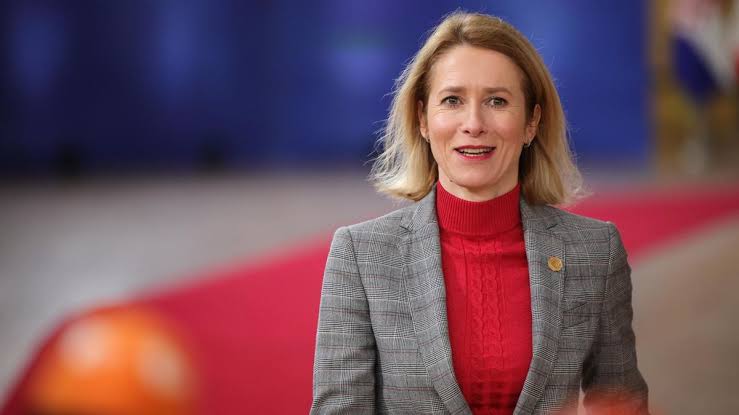
European Union foreign policy chief Kaja Kallas said an architecture already exists through treaties, sovereign choices and NATO. In her account, the problem is not an institutional vacuum but Russia's repeated violation of the rules, which gives Vladimir Putin no veto over European security decisions.
Polish Foreign Minister Radosław Sikorski called an arrangement reached above Europe's head politically unacceptable and practically impossible. Ukrainian Foreign Minister Andrii Sybiha added that Moscow cannot act as a guarantor after invading Ukraine, and warned against reviving spheres of influence across Eastern Europe.
Washington is nonetheless exploring a wider framework. Jared Kushner, participating in consultations with European and NATO officials, said the United States wants practical arrangements addressing the concerns of all parties. Renewed Russian, Ukrainian and American talks are scheduled in Abu Dhabi next week.
The European objection concerns both process and substance. Any settlement would require European states to finance reconstruction, maintain sanctions, provide security guarantees and manage the consequences of renewed conflict. They therefore reject commitments made by others that would later depend on European implementation.
Russia's pre-invasion demands included rolling NATO's military presence back from countries admitted after 1997. Accepting restrictions of that kind would challenge the principle that states choose their own alliances. Ukraine, meanwhile, wants guarantees strong enough to deter another attack rather than a temporary political assurance.
Abu Dhabi will test whether American mediation can narrow military issues without opening a parallel struggle over Europe's sovereignty. Kallas's intervention makes the constraint explicit: an agreement that excludes European participation may be announced, but it cannot become a durable continental order without European consent.