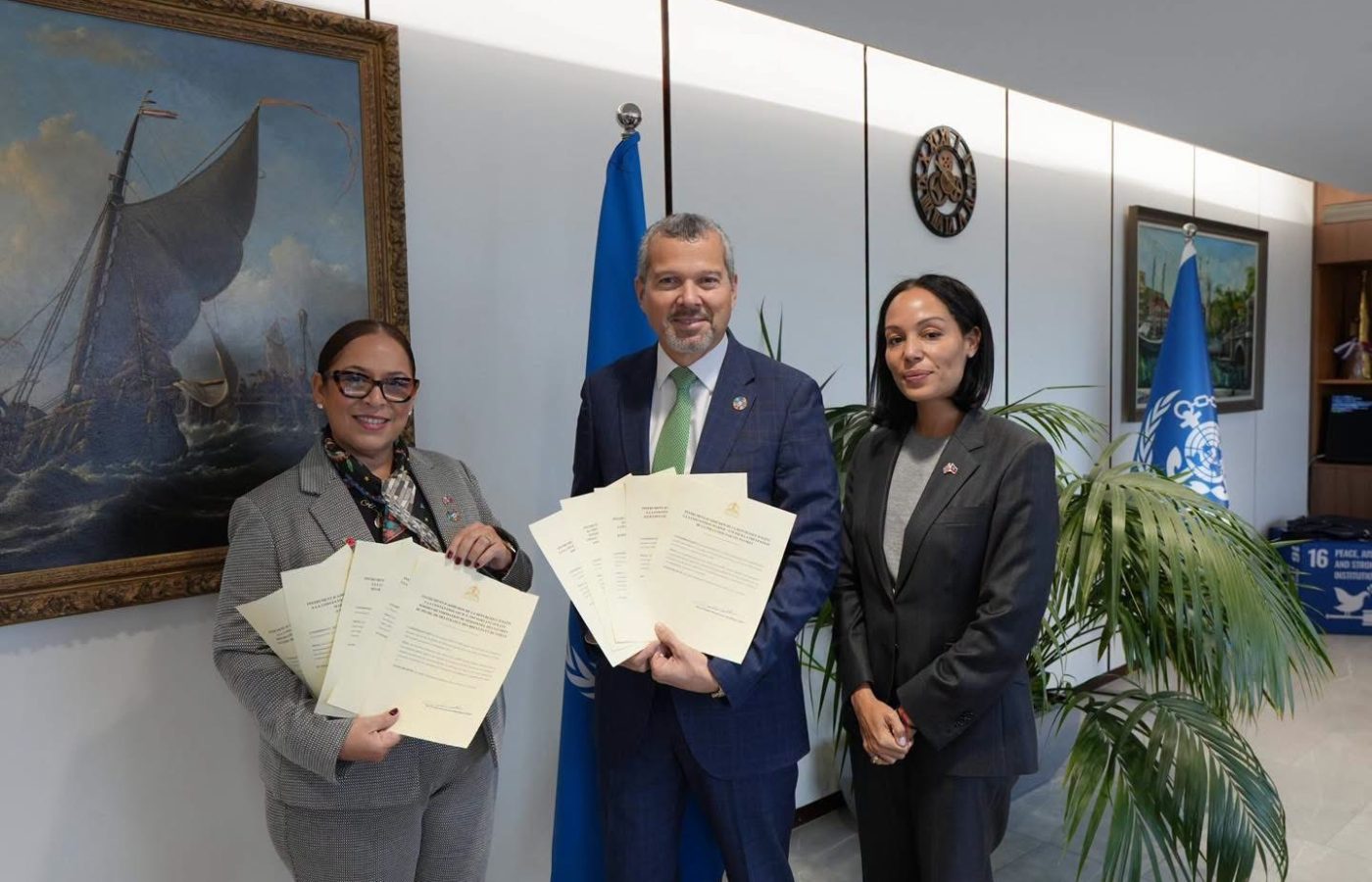
Haitian Foreign Minister Raina Forbin formally deposited instruments of accession to ten international maritime conventions at the International Maritime Organization in London. The step expands Haiti's legal commitments across navigation, environmental protection, rescue and compensation for maritime damage.
Forbin met IMO Secretary-General Arsenio Antonio Domínguez Velasco with Ambassador Anaïse Manuel, Haiti's permanent representative to the organisation. Depositing the instruments completes the international act of accession, but domestic implementation will require laws, institutions, training and enforcement capacity.
The conventions address navigational safety and search and rescue at sea, both essential for a country exposed to hurricanes, irregular maritime movement and limited emergency resources. Effective compliance requires communications, trained crews, port procedures and coordination among national authorities.
Pollution prevention and environmental protection form a second group. Haiti must be able to monitor vessels, respond to spills and apply standards in ports and coastal waters, turning treaty obligations into operating rules for public agencies and private shipping.
Liability and compensation mechanisms can clarify who pays when maritime activity causes damage. Their value depends on courts, insurance, documentation and competent investigation, particularly where an incident affects fishing communities, coastal ecosystems or trade infrastructure.
Forbin requested expanded IMO technical cooperation and met audit official Caroline Neumann to review recommendations and available assistance. That follow-up acknowledges that formal accession without technical support could create obligations beyond the state's current administrative reach.
Haiti views the maritime sector as a source of connectivity, trade, investment and jobs. The ten accessions provide a framework, not a result: progress will be measured by updated law, completed audits, safer navigation, pollution response and ports capable of meeting international standards.