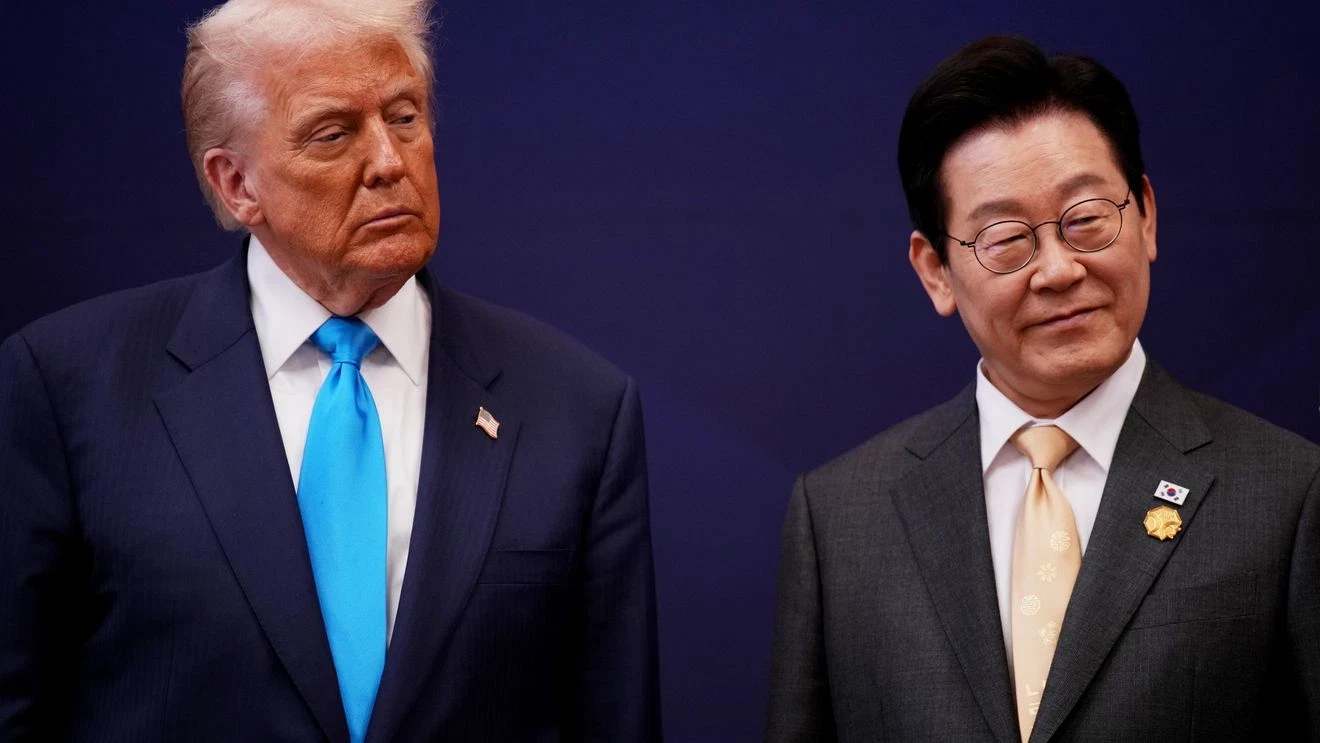
President Donald Trump ordered the Pentagon to substantially reduce annual joint military exercises with South Korea after the drills had already begun. He cited their cost, Seoul's refusal to support the US war against Iran and his personal relationship with North Korean leader Kim Jong Un.
Trump argued that the training sent an inappropriate and hostile signal to Pyongyang, which he described as respectful and nonthreatening during his presidency. Because it was too late to cancel the exercises, he instructed Defense Secretary Pete Hegseth to scale them back instead.
The directive marked a sharp shift in the administration's treatment of a longstanding Asian ally. Only months earlier, Hegseth had praised South Korea for increasing defense spending and assuming greater responsibility for security on the Korean Peninsula, presenting Seoul as a model of alliance burden-sharing.
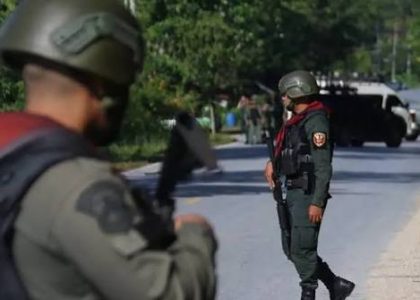
Ulchi Freedom Shield, one of the two main annual combined training cycles, was scheduled to last 11 days and involve about 18,000 South Korean troops. Planned activities included live-fire precision targeting, maneuver operations, a wet-gap crossing and the distribution of prepositioned military equipment.
South Korea's Defense Ministry said the exercises began as planned. The US military has described them as central to regional peace, alliance coordination and the joint ability to defend both countries, making the order to reduce them operationally significant even though the precise cuts were not immediately detailed.
The decision came shortly after North Korea resumed ballistic missile tests in violation of United Nations restrictions. South Korea, the United States and Japan detected two launches earlier in August, while Pyongyang warned that the allied drills were rehearsals for war and threatened a stronger response.
Critics in Washington warned that reducing complex joint training could weaken preparedness. Senator Mark Kelly, a former Navy pilot, called the move shortsighted, while the wider policy revived memories of Trump's surprise suspension of major exercises after his 2018 summit with Kim in Singapore.
The order therefore places renewed diplomacy with Pyongyang ahead of some traditional alliance practices at a moment of heightened regional uncertainty. Kim has continued enlarging North Korea's nuclear and missile forces, but has also indicated that talks could resume if Washington abandons its demand for the country's denuclearization.