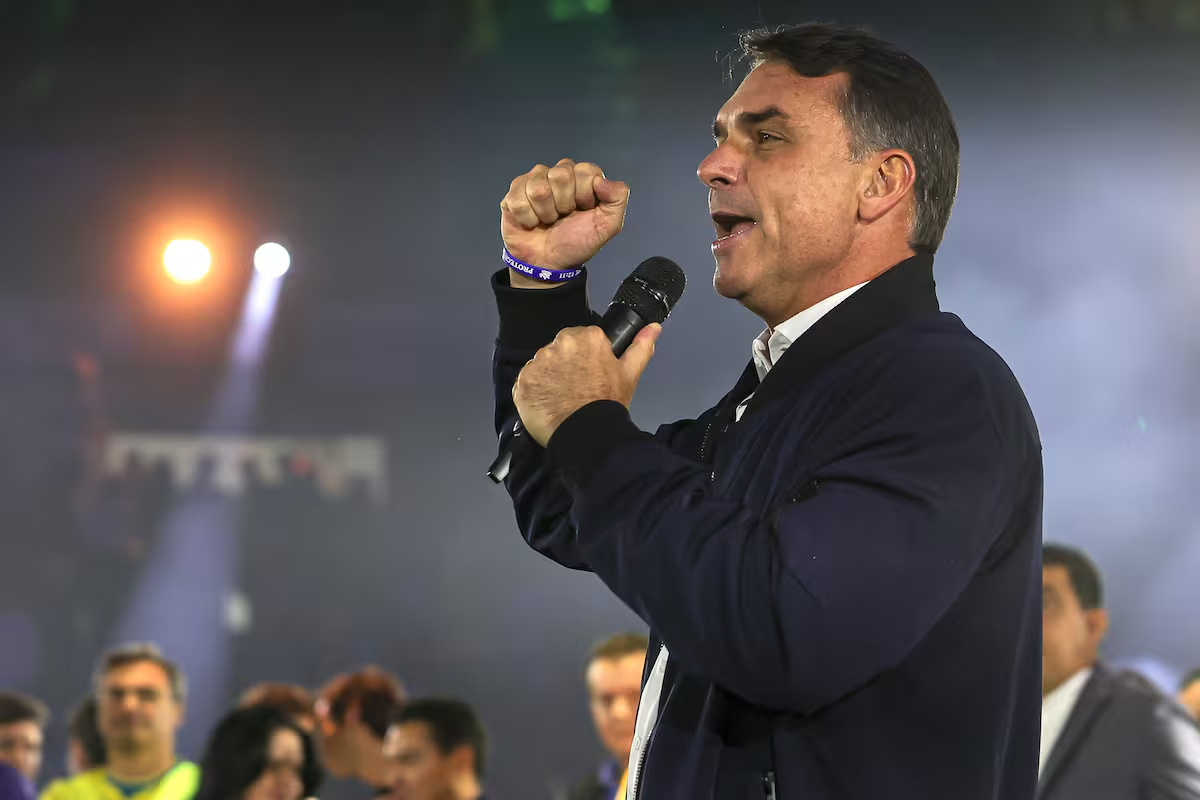
Flávio Bolsonaro's presidential campaign is drafting a fiscal framework that would tie federal spending growth to Brazil's public-debt burden. The design would replace the current budget rule and could reduce real expenditure growth to zero when debt rises above a proposed threshold.
Bolsonaro, a senator and the eldest son of former president Jair Bolsonaro, is the leading right-wing challenger to President Luiz Inácio Lula da Silva in the October election. The economic platform remains under preparation and is due to be released by August 15, the deadline established by electoral law.
The debate is driven by a sharp deterioration in the debt ratio. Brazil's gross public debt reached 81.9 percent of gross domestic product in June, up from 71.4 percent when Lula took office in January 2023, increasing pressure on the next administration to present a credible stabilization path.
One version under discussion would freeze federal spending in real terms whenever gross debt exceeds 80 percent of GDP. If debt stands between 75 and 80 percent, expenditure could grow by no more than half the increase in revenue; below 75 percent, the ceiling could rise to 70 percent of revenue growth.
The precise thresholds and formulas have not been settled. People familiar with the drafting said the concept has been presented privately to investors and could be sent to Congress as a constitutional amendment during a possible transition later this year.
Lula's existing framework permits annual real spending growth of between 0.6 and 2.5 percent and limits the increase to no more than 70 percent of revenue growth. The Bolsonaro proposal would retain a primary-balance objective and a spending ceiling, but make the allowable expansion more restrictive as debt climbs.
The plan is also expected to include expenditure cuts and a review of tax benefits intended to produce a fiscal adjustment equal to 1.5 percent of GDP. The levels of the primary target and the broader spending cap are still being defined, leaving important distributional and implementation choices unresolved.
The campaign says its program will seek stronger fiscal discipline, greater public-sector efficiency and conditions for faster economic growth. Its advisers expect tighter controls to improve investor confidence and reduce long-term interest rates, but the proposal's final reach will depend on the platform released in August and on the congressional support available after the election.