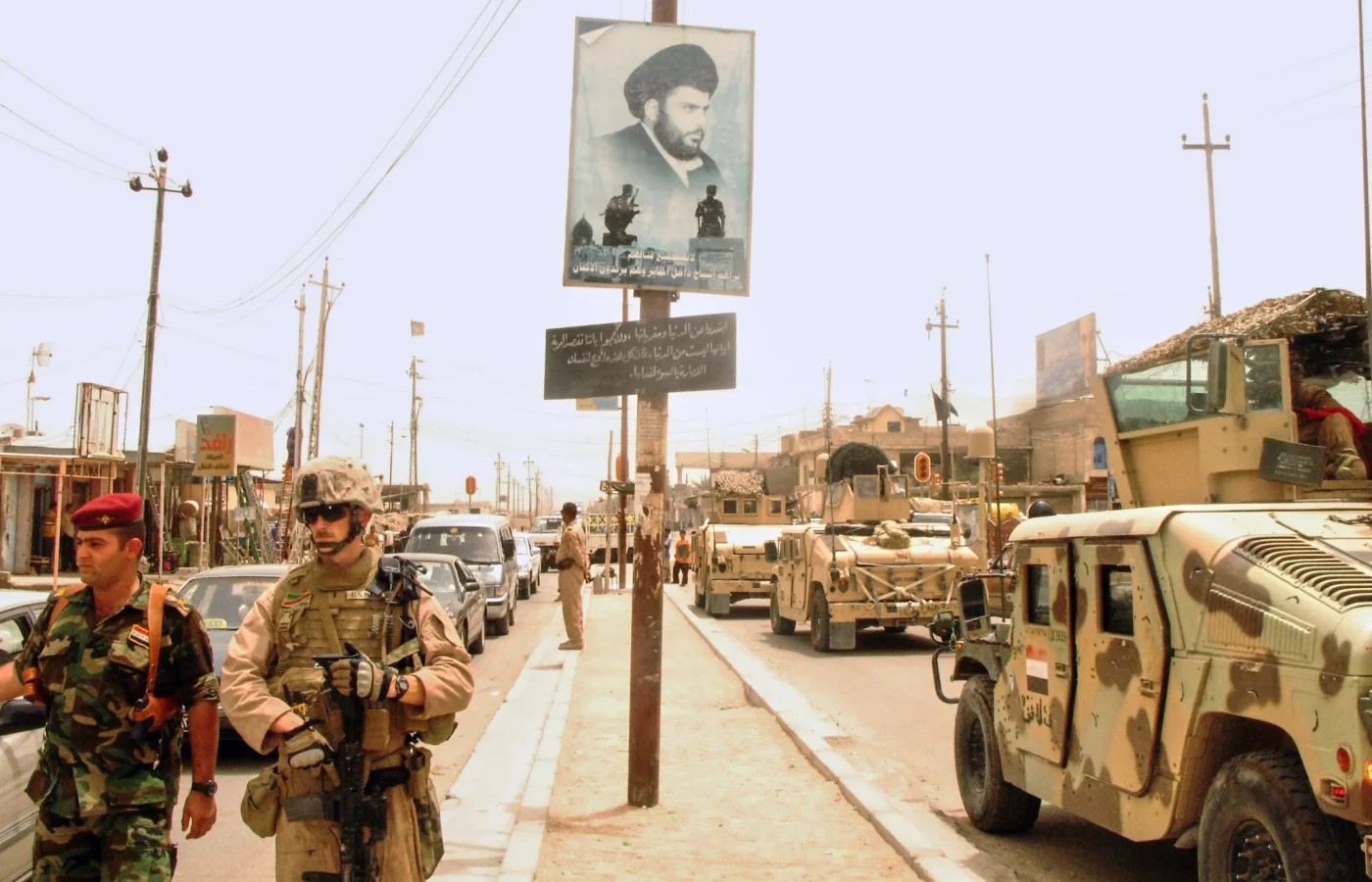
The United States is on track to withdraw all of its military forces from Iraq by September 30, ending the current phase of a presence that began with the 2003 invasion that removed Saddam Hussein. Officials from both countries described the date as the endpoint for the US-led coalition mission inside Iraq.
Washington and Baghdad agreed in 2024 to wind down the smaller operation established against the Islamic State group. US troops left bases across most of Iraq last year but remained in the semi-autonomous Kurdish region in the north. Those positions have faced repeated attacks since the United States and Israel began war with Iran on February 28.
Iraqi Prime Minister Ali al-Zaidi met Admiral Brad Cooper, commander of US Central Command, in Baghdad. After the meeting, al-Zaidi reaffirmed September 30 as the fixed and final date for ending the Global Coalition to Defeat ISIS mission and completing the departure of its forces.
A US official confirmed the expected timetable but did not disclose how many troops remained or where they would go after leaving. The official said Iraqi security forces, including the Peshmerga and other forces of the Kurdistan region, would assume leadership of counterterrorism operations. Two Kurdish officials said the movement of US personnel and equipment out of Erbil had begun about three weeks earlier.
The scale and purpose of the American presence have changed repeatedly. More than 170,000 US troops were deployed at the peak of counterinsurgency operations in 2007, and the final combat forces of that phase departed in December 2011. US units returned in 2014 at the Iraqi government's invitation after Islamic State seized large areas of Iraq and Syria.
Coalition military operations formally ended in 2021 after the group lost control of the territory it had claimed. The United States nevertheless maintained about 2,500 troops in Iraq to train local forces and conduct joint counter-IS missions. The September withdrawal is intended to complete the transition from that military role to Iraqi responsibility.
Al-Zaidi has tied the foreign-force departure to a second September 30 deadline: non-state armed groups are supposed to give up their weapons. He argues that militias will no longer be able to justify carrying arms by pointing to a foreign military presence once coalition troops leave.
That parallel objective remains far less certain than the withdrawal. Some militias have long characterized the US mission as an occupation, even though the post-2014 deployment operated at Baghdad's invitation. Several of the country's most powerful Iran-backed groups have said they do not intend to disarm, making it unlikely that the government will meet both deadlines simultaneously.