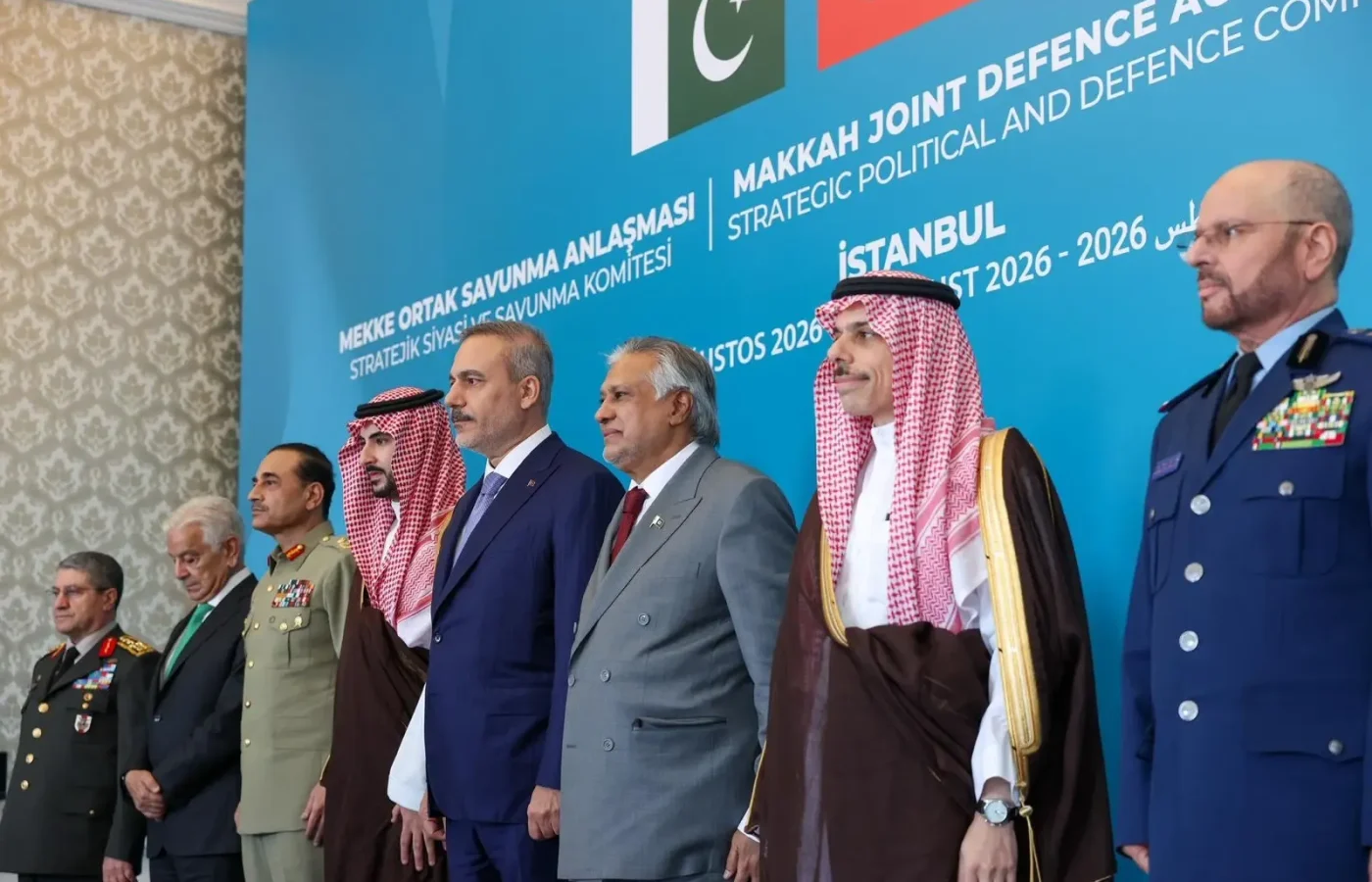
Türkiye, Pakistan and Saudi Arabia held the first meeting of their Strategic Political and Defense Committee in Istanbul, bringing together foreign and defense ministers and the three chiefs of general staff. Turkish Foreign Minister Hakan Fidan presented the gathering as the start of practical work to institutionalize their trilateral defense arrangement.
The countries' leaders signed the Mecca Joint Defense Agreement on August 7 under the principle of regional ownership. Fidan argued that regional states need collective mechanisms for security, stability, prosperity and lasting peace, describing the pact as the beginning of a new architecture rather than a temporary consultation format.
The committee formally adopted the name Mecca Defense Alliance. Fidan emphasized that the organization is purely defensive and does not target another country, an important qualification as the three governments try to define its political purpose and distinguish it from an offensive coalition.
A permanent secretariat will be established in Riyadh, and its first secretary will come from Pakistan. These decisions create an administrative center and an initial leadership formula, while further work will determine procedures, coordination between ministries and the relationship between political direction and military planning.
The alliance is designed to admit other like-minded regional countries, but enlargement will not begin immediately. Fidan said members must first agree on standards, conditions and a well-shaped internal structure so that any future entrants join an institution with established rules rather than an unfinished framework.
Fidan also addressed Israel, accusing Prime Minister Benjamin Netanyahu and his government of threatening the wider region and urging international action. The comments linked the new alliance's institutional discussion to Türkiye's broader security narrative, though he did not announce a specific alliance measure directed at Israel.
On the Black Sea, Fidan said attacks by Russia and Ukraine on civilian shipping threatened maritime safety and global food security. He reported calls for Türkiye to launch a new initiative protecting the movement of wheat and other food products and said Ankara remained in contact with both sides.