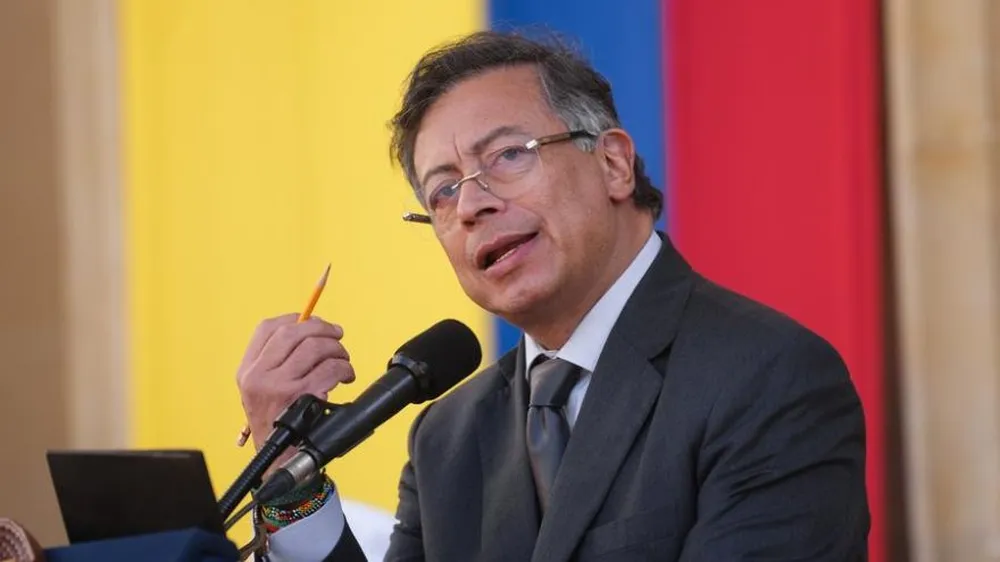
Colombia's outgoing president, Gustavo Petro, has renewed his allegations of fraud in the June presidential election days before conservative president-elect Abelardo de la Espriella is due to take office. The dispute is carrying the unresolved political confrontation over the result into the final stage of the transfer of power.
During an hourlong presentation to journalists, Petro alleged that programmers manipulated results from thousands of tally sheets after vote counts were transmitted to the headquarters of Colombia's national registrar. He framed the claimed digital intervention as evidence of a deeper institutional problem.
International observers and Colombian electoral authorities have rejected the fraud allegations. The authorities declared in late June that de la Espriella defeated Petro ally Iván Cepeda by 250,000 votes, and the president-elect is scheduled to begin a four-year term after being sworn in before a joint session of Congress.
Petro has refused to recognize the result. He described the election as obscure and influenced by foreign powers, while arguing that officials failed to provide metadata for tally sheets scanned and posted on a public website where citizens can review the results from individual voting centers.
The victory has already been certified by electoral judges, leaving the outgoing president with little legal capacity to prevent the inauguration. The institutional process is therefore moving forward even as Petro continues to characterize the incoming government as illegitimate.
The political impact may extend beyond the formal certification. Analysts warned that repeated fraud claims could weaken de la Espriella's standing among some voters and deepen polarization at the start of a new administration.
Cepeda has said he will organize protests against the incoming president and withhold recognition until de la Espriella meets several conditions, including renouncing his dual United States citizenship. The opposition strategy places street mobilization and questions of political legitimacy alongside the completed electoral process.
Petro also urged rural communities to form committees he called liberation guards to resist military detachments he alleged were allied with local mafia groups. Andrés Macías, a political-science professor at Externado University, warned that the appeal could justify civilian use of weapons in conflict-affected areas. Petro separately said he feared being forcibly removed from Colombia after leaving office, while promising to remain active in the opposition.