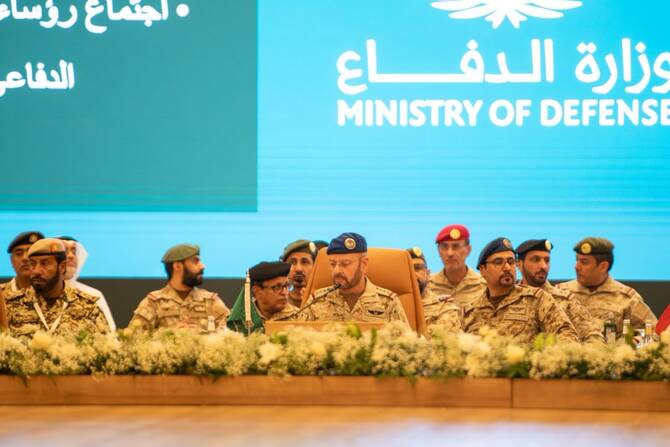
Saudi Arabia has established a multinational maritime defense alliance to protect navigation through the Red Sea, the Bab al-Mandab Strait and the Gulf of Aden. Riyadh will act as the founding and leading state and will host the alliance's permanent headquarters.
The initiative was announced after a Saudi Defense Ministry meeting in Riyadh attended by military chiefs and representatives from 43 countries, alongside a European Union delegation. Fourteen governments signed a joint declaration supporting the new framework.
The signatories were Saudi Arabia, Kuwait, Bahrain, Qatar, Pakistan, Türkiye, Egypt, Jordan, Yemen, Bangladesh, Nigeria, Sudan, Djibouti and Somalia. Their geographic spread links Gulf and Red Sea states with partners from South Asia and Africa.
The declaration defines the alliance as defensive. Its stated missions are to strengthen maritime security, protect freedom of navigation and secure international trade routes and energy supply lines across the three connected waterways.
Operational participation will not be automatic. Each member will decide whether to join specific activities under its own national laws, preserving sovereign authority over military commitments while operating inside a common security structure.
The alliance emerges amid higher regional tensions. Yemen's Houthi movement announced a maritime ban on Saudi shipping on July 20 and claimed attacks against Saudi oil tankers in the Red Sea, increasing pressure on Riyadh to protect its commercial traffic.
Disruption in the Strait of Hormuz linked to the United States-Iran confrontation has also increased the importance of the Red Sea route for Saudi oil exports. Bab al-Mandab connects the Gulf of Aden with the southern Red Sea and forms a critical passage for traffic moving to and from the Suez Canal.
The new headquarters gives Saudi Arabia an institutional platform for coordinating a broad group of states around shipping and energy security. Its practical reach will depend on which members choose to contribute to operations and how the alliance converts political support into surveillance, escort or crisis-response capacity.