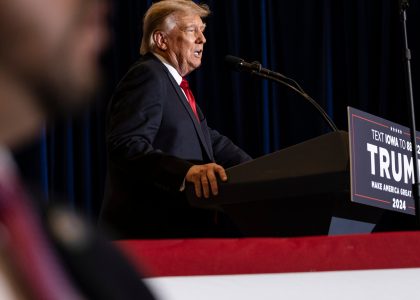
U.S. President Donald Trump said Washington was engaged in deep talks with Iran but warned that he was prepared to order strong military action if diplomacy failed. He gave the negotiating track a compressed horizon, saying it would have to move quickly or not proceed at all.
Trump later described the discussions as good and said there was a meaningful chance of an agreement. Speaking aboard Air Force One on the way to Michigan, he used a more open timetable, saying he had sufficient time to deal with Iran while maintaining the warning of force.
The mixed message combined diplomatic engagement with coercive pressure. It left Tehran facing a demand for rapid movement without a publicly defined deadline, while Washington preserved the option of returning to military operations.
Trump also said he would question Russian President Vladimir Putin about the provision of satellite imagery to Iran. The issue introduced Moscow's possible technical support into the U.S.-Iran confrontation at a moment when Washington was assessing the conditions for continued talks.
The exchanges followed a halt to a two-week U.S. bombing campaign. Thirteen successive nights of intensifying attacks had prompted Tehran to fire on U.S. bases before Trump paused the operation over the weekend after military commanders said the campaign had run its course.
Iran said it would suspend its own attacks for as long as the U.S. pause remained in effect. Tehran also said it still controlled the Strait of Hormuz and was not seeking to resume peace negotiations, leaving a visible gap between Trump's description of active talks and Iran's public position.
The pause immediately affected energy markets. Brent crude had briefly risen above $100 a barrel for the first time since May, then fell more than 8 percent to just under $89 as traders anticipated that disrupted global supply flows might resume.
Military incidents nevertheless continued around the region. Jordan said it shot down two drones, while Iraqi security officials reported drone strikes on a base used by Iranian Kurdish opposition fighters in northern Iraq, with no casualties reported. Those events underscored the fragility of the pause as Washington pressed for a fast diplomatic outcome.