
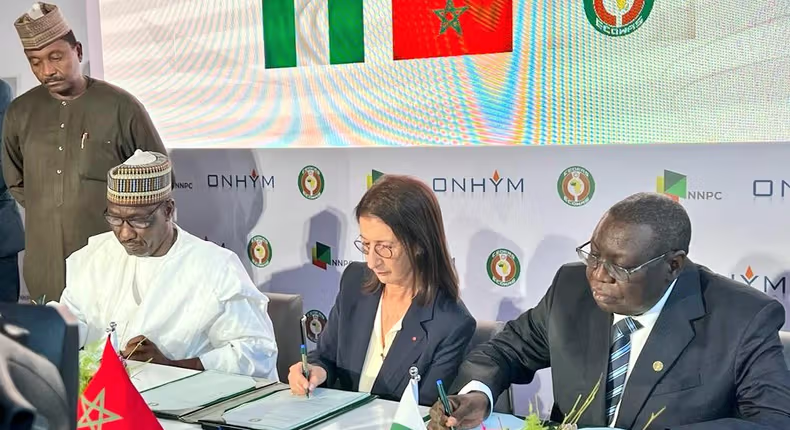
The Economic Community of West African States (ECOWAS) has formally endorsed the Nigeria-Morocco Atlantic gas pipeline, one of the most ambitious energy infrastructure projects ever conceived on the African continent. Member states signed an intergovernmental agreement on Sunday in Freetown, Sierra Leone, according to a joint statement from Morocco's hydrocarbons agency ONHYM and Nigeria's state-owned oil company NNPC.
The pipeline, first agreed upon a decade ago between the Moroccan King and the Nigerian president, is designed to transport up to 30 billion cubic metres of natural gas annually. It will run approximately 6,900 kilometres along a hybrid offshore-onshore route, crossing 13 West African countries before reaching Morocco. Of that total capacity, 15 billion cubic metres per year will be channelled to Moroccan and European markets through an existing pipeline link between Morocco and Spain.
Estimated to cost $25 billion, the project has already completed its feasibility study and front-end engineering design stages. Its advocates see it as a transformative infrastructure initiative capable of reshaping the region's energy landscape. The pipeline is intended to spur economic integration across West Africa by expanding electricity generation and facilitating industrial and mining development, while also positioning Morocco as a strategic energy bridge between Africa and Europe.
The agreement signed in Freetown represents a significant milestone in moving the project from planning to execution. It provides the political and legal framework necessary for the participating states to coordinate on construction, financing, and regulatory matters. The next step will involve the signing of a separate bilateral deal between Morocco and gas-rich Mauritania, expected to take place at a later date in the presence of Nigeria's president.
For West Africa, the pipeline promises to unlock new economic opportunities by providing reliable natural gas supplies to countries that have long struggled with energy deficits. Improved access to gas-fired electricity generation could accelerate industrialisation, support mining operations, and reduce reliance on costly imported fuels. The project also offers a potential export route for Nigerian gas, diversifying markets beyond traditional buyers.
The endorsement by ECOWAS comes at a time when global energy markets are increasingly focused on diversifying supply sources. The pipeline would offer Europe an alternative to Russian gas, while giving African producers a direct link to European consumers. It also aligns with broader efforts to develop regional energy infrastructure under the African Union's Agenda 2063.
While the project still faces significant challenges—including financing, security, and coordination across multiple jurisdictions—the intergovernmental agreement marks a decisive step forward. The coming months will be critical as the signatory states work to translate political commitment into tangible progress on the ground.


