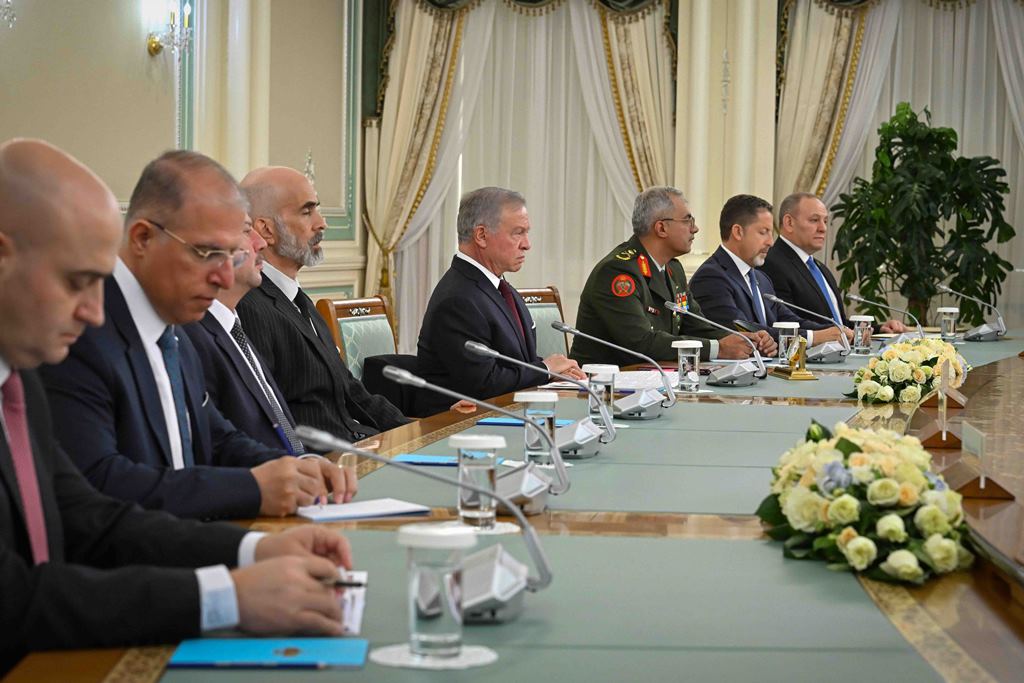
Kazakh President Kassym-Jomart Tokayev and Jordan's King Abdullah II used talks in Astana to connect bilateral commerce with regional security. Their agenda moved beyond ceremonial friendship by placing counterterrorism, emerging technology and implementation of earlier agreements inside one political framework.
Tokayev called Jordan a time-tested and reliable Arab partner and said reciprocal high-level visits during the previous year had created new momentum. A joint statement and agreements among government agencies and businesses now provide the test: whether political access produces projects and sustained institutional contact.
Economic cooperation was presented as the main driver of the relationship. The leaders identified trade, investment, tourism, technology and defence as areas for expansion, while Tokayev added academic and scientific exchange to the sectors capable of creating ties beyond official delegations.
Security cooperation centred on the Aqaba Process, the initiative King Abdullah launched more than a decade ago to coordinate responses to terrorism and violent extremism. Kazakhstan will co-host the format's first Central Asian meeting, giving the region a direct role in an established Jordanian diplomatic platform.
Artificial-intelligence security will be the meeting's principal theme. Tokayev described the subject as timely because AI can affect recruitment, propaganda, surveillance and state resilience, while Central Asian governments want their own risks and regulatory concerns represented in international discussions.
King Abdullah said Jordan intended to keep implementing the agreements reached during last year's exchanges and deepen security cooperation. The two leaders also exchanged their countries' highest honours, using the awards to underscore political trust and the symbolic link between Arab and Central Asian traditions.
The partnership remains broad and will need measurable follow-through. Tokayev and Abdullah have supplied access and a security forum; the next evidence should be trade growth, investable projects, technical exchanges and a Central Asian Aqaba meeting that produces practical cooperation rather than declarations alone.