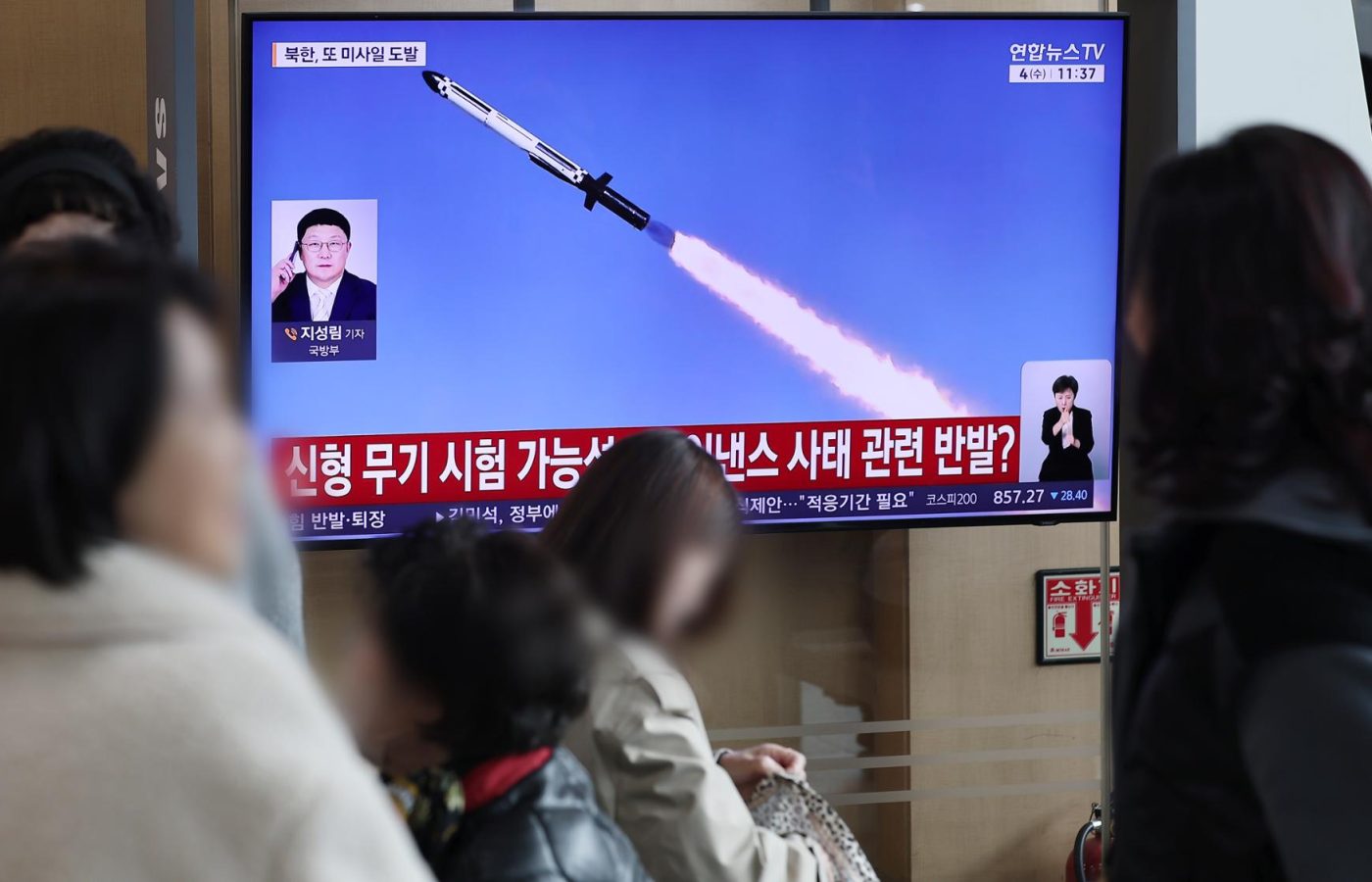
North Korea says it tested a new air-defence missile system and conducted a long-range strategic cruise-missile strike drill on November 4, its fourth weapons event in a week. South Korea had detected multiple launches from the Sondok area toward the East Sea early that day.
The North's Missile Administration said the air-defence trial confirmed the reliability of new materials, intelligent multiple-guidance modes, target identification, tracking and information processing. Those claims were reported by state media and were not independently verified through disclosed performance data.
A separate firepower unit in the eastern region launched a long-range strategic cruise missile against a simulated airport. South Korea's Joint Chiefs of Staff said observed projectiles travelled less than 300 kilometres and initially left open whether a close-range ballistic missile had been involved.
The launches followed a 600-millimetre ultra-precision multiple-rocket test attended by Kim Jong-un, a cluster munition intended for tactical ballistic missiles and a dispersal warhead for strategic cruise weapons. The sequence suggests evaluation of different layers of offence and defence rather than one isolated programme.
Analysts linked the timing to the Freedom Flag air exercise conducted by South Korea and the United States. A member of North Korea's Central Military Commission had accused the allies of intensifying military preparations, language Pyongyang routinely uses to justify weapons development as a defensive response.
The tests also coincided with US midterm elections and statements by Kim Yo-jong rejecting an American investigation that blamed North Korea for stealing more than $6 billion in cryptocurrency from Binance. Cybercrime, sanctions and military deterrence are now moving together in the political confrontation.
The immediate challenge is determining what capability the tests actually demonstrated. Flight profiles, guidance performance and production status remain uncertain. Repeated launches nonetheless increase pressure on South Korean and US air defences and create more opportunities for miscalculation during large allied exercises.