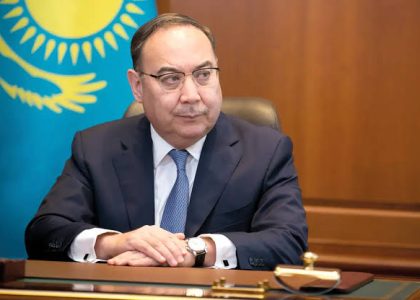
Armenian Foreign Minister Ararat Mirzoyan and Kazakh Deputy Prime Minister Asel Zhanasova have discussed upgrading bilateral relations through transport, investment and commercial contacts. Their meeting framed strategic partnership as a practical connectivity agenda rather than a declaration limited to political cooperation.
The officials reviewed regional communications projects associated with Armenia's Crossroads of Peace initiative. Yerevan presents the plan as a network of reopened rail and road links operating under national sovereignty, reciprocity and customs control, potentially connecting the South Caucasus with Central Asia and wider markets.
Mirzoyan and Zhanasova also considered expanding trade and encouraging reciprocal investment. Business-to-business contacts are important because government corridors create routes but do not generate cargo automatically; firms need predictable border procedures, finance, insurance and sufficient demand to use them competitively.
Trade between Armenia and Kazakhstan reached almost $70.5 million from January through September 2026, 17.5 per cent more than in the same period a year earlier. The increase provides momentum, although the absolute volume remains modest relative to both countries' broader external commerce.
Kazakhstan can gain diversified access toward the Black Sea, Turkey and Iran, while Armenia seeks alternatives to narrow routes and excessive dependence on individual partners. The strategy also connects with the Trans-Caspian corridor, whose value has risen as Eurasian trade adjusts to sanctions and geopolitical disruption.
Political obstacles remain. Regional projects depend on stable Armenia-Azerbaijan relations, border agreements, railway rehabilitation and compatible customs systems. Financing infrastructure without settled operating rules could create expensive assets that are underused or vulnerable to renewed diplomatic tension.
The meeting established direction rather than announcing a signed transport concession or investment figure. Mirzoyan and Zhanasova now need working groups, project sequencing and measurable commercial targets. Progress will be visible when freight moves more cheaply and businesses invest, not simply when connectivity appears in joint statements.