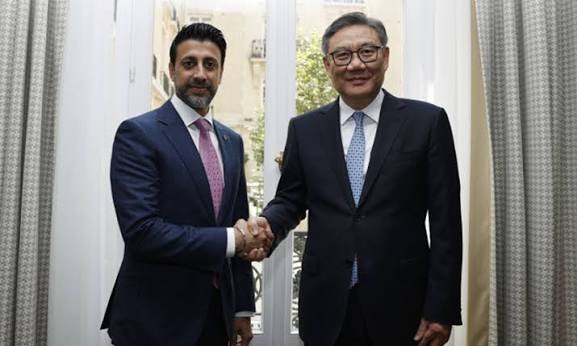
China and Canada have used the first ministerial meeting of their Joint Economic and Trade Commission to stabilise a relationship marked by tariffs and political mistrust. Commerce Minister Wang Wentao and Canadian Trade Minister Maninder Sidhu agreed to expand cooperation across established industries and emerging technologies.
Wang described the commission as the principal channel for reducing disputes and enlarging areas of cooperation. He identified oil and gas, agriculture, seafood and consumer goods alongside new materials, advanced manufacturing, clean energy and smart agriculture, creating a broad agenda without resolving every existing restriction.
The two governments extended favourable market access for Canadian canola meal, peas, lobsters and crabs through the end of 2028. Canada will maintain tariff relief for selected Chinese steel and aluminium products not made domestically, giving exporters greater predictability on both sides.
The measures build on the January understanding reached during Prime Minister Mark Carney's Beijing visit. Canada allowed an annual quota of 49,000 Chinese electric vehicles at a 6.1 per cent tariff without the additional 100 per cent surtax, while China adjusted measures on Canadian farm products.
Wang and Sidhu also signed a memorandum establishing a business-leaders roundtable. That forum can surface commercial obstacles, but government decisions will still determine market access, investment screening and national-security limits in sectors such as critical minerals, telecommunications and advanced manufacturing.
Bilateral goods trade reached $80.39 billion in the first nine months of 2026, up 17.2 per cent from a year earlier. Chinese imports from Canada grew 22.8 per cent to $39.53 billion, supporting Ottawa's target of increasing exports to China by half by 2030.
The renewed mechanism reduces uncertainty but does not erase strategic competition or Canada's economic dependence on the United States. Its durability will be measured by dispute resolution, not meeting frequency. Clear implementation through 2028 could create a buffer against a more fragmented global trading system.