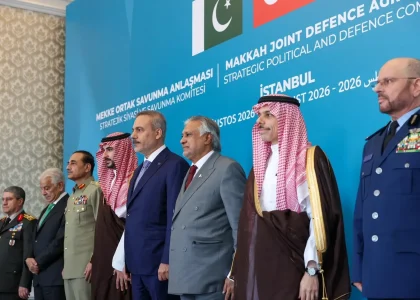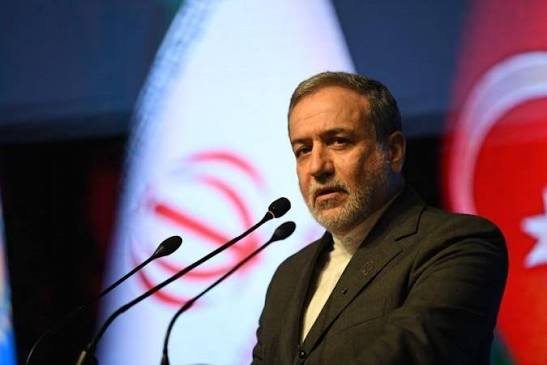
Iranian Foreign Minister Abbas Araghchi held a second round of telephone conversations within 24 hours with Pakistan's Field Marshal Syed Asim Munir and Saudi Foreign Minister Prince Faisal bin Farhan. The exchanges formed part of an intensified regional effort to prevent the five-month conflict from widening.
The calls followed Araghchi's contacts a day earlier with Munir and Turkish Foreign Minister Hakan Fidan. They came after President Donald Trump suspended planned US military action and said Middle Eastern governments had reached the parameters of a possible agreement, an account Iran disputes insofar as it suggests Tehran requested the pause.
Iranian state media characterized the latest discussions as a review of diplomatic initiatives aimed at maintaining security and stability across West Asia. The participants emphasized regional cooperation and political solutions, placing neighboring governments inside the effort to manage escalation.
Washington and Tehran were preparing for another round of talks that Trump said would begin on Monday, although he did not establish a deadline for an agreement. The expected agenda includes Iran's nuclear program and reopening the Strait of Hormuz, the central maritime bottleneck in the crisis.
Araghchi had warned that any hostile action by the United States or Israel, or participation by regional countries in such operations, would receive a decisive and proportionate response. That warning remains part of the diplomatic setting even as Iranian officials continue consultations with Pakistan, Saudi Arabia and Türkiye.
The United States and Israel began military operations against Iran in late February, presenting their objectives as limiting Tehran's missile capabilities, preventing a nuclear weapon and ending its support for allied armed groups. The fighting has since disrupted shipping in the Gulf and Red Sea and extended to a Mediterranean facility in Egypt.
Iran has largely closed the Strait of Hormuz, which carried about 20 percent of the world's oil and liquefied natural gas before the war. Restricted passage has raised energy prices and fed broader inflation, turning access to the waterway into both a negotiating issue and a source of international economic pressure.
Trump has repeatedly threatened further escalation before allowing additional time for diplomacy, and the talks have not yet produced a comprehensive settlement. The renewed calls show Pakistan, Saudi Arabia and Türkiye working as regional channels while the immediate pause in attacks leaves the nuclear, shipping and security disputes unresolved.