Saudi Arabia has announced a multinational maritime defense alliance intended to protect shipping in the Red Sea, the Bab al-Mandab Strait and the Gulf of Aden. The initiative treats the three waterways as a connected security zone for trade and energy flows.
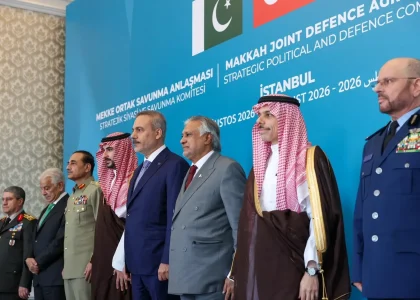
The framework followed a meeting hosted by the Saudi Defense Ministry in Riyadh with military chiefs and representatives from 43 countries and a European Union delegation. Fourteen states issued the declaration: Saudi Arabia, Kuwait, Bahrain, Qatar, Pakistan, Türkiye, Egypt, Jordan, Yemen, Bangladesh, Nigeria, Sudan, Djibouti and Somalia.
The alliance defines its role as defensive and assigns Saudi Arabia the founding leadership and permanent headquarters. Participation in operations will remain a sovereign choice for every member under its national law, so political endorsement does not automatically create a common deployment.
The immediate environment includes repeated Houthi attacks on commercial shipping, a ban declared against Saudi vessels and claimed strikes on Saudi oil tankers. These threats have increased pressure on Riyadh to protect maritime traffic across the Red Sea corridor.
Tension between Washington and Tehran has simultaneously raised uncertainty around the Strait of Hormuz and regional energy routes. The alliance reflects a view that the Gulf, Hormuz, the Red Sea and the Gulf of Aden can no longer be treated as separate theaters because disruption in one corridor shifts pressure onto the others.
Researcher Salah Ali Salah said the principal obstacle may be political consensus rather than military capacity. Participating states depend on Red Sea routes to different degrees and may not define the threat or the appropriate response in the same way.
Yemeni analyst Murad Al-Arefi described Hormuz and Bab al-Mandab as strategic arteries that have also become instruments of geopolitical pressure. He linked the alliance to declining regional confidence that US-Iran negotiations alone can address the roots of instability.
Other Yemeni specialists cautioned that maritime deployments can contain immediate risks but cannot deliver lasting stability without progress on the conflicts in Iran and Yemen. They also warned that excessive internationalization could intensify rivalry, leaving the alliance's durability dependent on cooperation among coastal states and political action ashore.