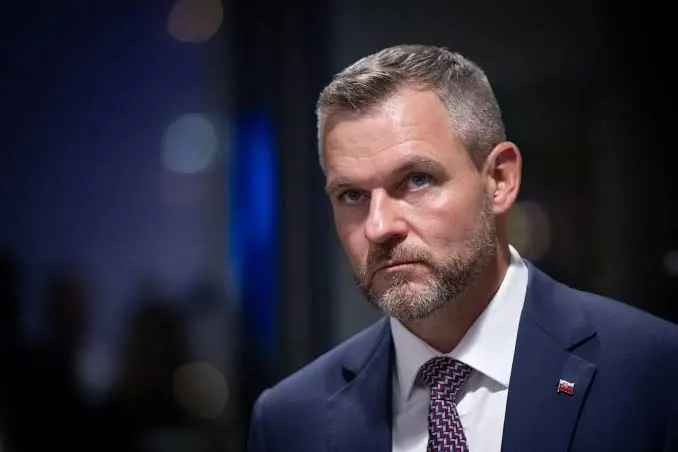
Chinese President Xi Jinping and Slovak President Peter Pellegrini agreed in Beijing to work toward a strategic partnership based on mutual respect, equality, practical benefit and long-term resilience. The talks took place during Pellegrini's state visit and were accompanied by an official welcome ceremony and banquet.
Xi said respect for each country's development path and a sustained commitment to cooperation had supported the rapid growth of bilateral relations. He welcomed Slovakia's adherence to the one-China principle and called for both governments to accommodate each other's core interests and major concerns.
Economic cooperation was directed toward emerging industries and frontier technologies. Xi identified clean energy, the digital economy, robotics and artificial intelligence as fields with room for new joint projects and a broader commercial relationship.
Pellegrini said Slovakia wanted more results in trade, investment, AI, digital activity, robotics and new energy. He invited additional Chinese companies to invest in the country, giving the proposed strategic partnership a concrete business and industrial dimension.
The two leaders also supported wider exchanges in culture, sport, tourism, youth programs and cooperation between local governments. Xi called for easier travel between the two countries, linking official ties to more regular movement by citizens and institutions.
China placed Slovakia's role inside the European Union at the center of the diplomatic agenda. Xi described the EU as a partner and asked Bratislava to contribute constructively to stable China-EU relations, while Pellegrini favored addressing bilateral differences through dialogue and consultation.
Both presidents endorsed multilateralism, the United Nations-centered international system and the international order based on law. They also supported closer coordination on the global governance of artificial intelligence, extending the technology agenda beyond investment and industrial applications.
The meeting joined bilateral economic priorities with a wider European and multilateral framework. Follow-through will depend on whether the two governments convert the proposed strategic partnership into investment decisions, sector agreements, easier mobility and sustained coordination between China and the EU.