China rejected US accusations that its artificial-intelligence laboratories systematically extracted capabilities from leading American models, opening a new front in the technology rivalry between the two countries. Beijing described the claims as groundless and said Washington was using security concerns to protect domestic industry from competition.
A US cyber-defense advisory issued on Tuesday alleged that major Chinese laboratories had conducted knowledge distillation on an industrial scale. The document identified DeepSeek, Moonshot, Alibaba, MiniMax, StepFun and Z.AI and said the activity involved millions of exchanges with systems developed by OpenAI, Anthropic, Google and xAI.
Knowledge distillation is a widely used training technique in which a smaller model learns to reproduce the outputs or behavior of a larger system. The practice itself is legitimate, but US authorities contend that the named companies used unauthorized access and automated activity at a scale that crossed into intellectual-property theft.
The advisory said the alleged operations had continued since late 2024 and suggested that Chinese authorities were probably aware of them. Moonshot declined to comment, while other named companies were contacted and StepFun could not immediately be reached, leaving the official allegations contested rather than independently adjudicated.
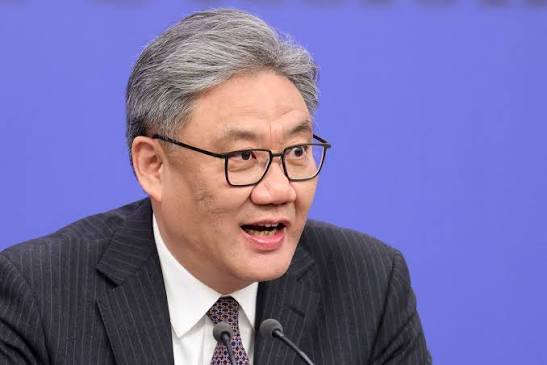
China's Commerce Ministry called the accusations a pretext for suppressing competitors, preserving an industry monopoly and applying double standards. Foreign Ministry spokesperson Mao Ning urged Washington to stop making unsupported claims and said China's artificial-intelligence advances resulted from domestic innovation and self-reliance.
The dispute comes before an expected White House meeting this month between President Donald Trump and President Xi Jinping, where artificial intelligence could become part of a wider economic and strategic agenda. It also follows pressure on the Trump administration over cheaper Chinese models that some companies prefer even when American systems remain more capable.
In July, several Chinese AI startups argued against blanket bans or strict restrictions on foreign systems outside sensitive government uses. Beijing, meanwhile, accused American artificial-intelligence products that same month of relying on Chinese examples, showing how allegations over training data and model behavior now move in both directions.
Mao said China favors cooperation and opposes politicizing technological development, but the competing accounts expose a deeper unresolved issue: common model-training techniques can be difficult to distinguish from prohibited extraction without transparent evidence. The controversy therefore adds commercial and diplomatic risk ahead of the leaders' talks without settling the underlying technical claims.