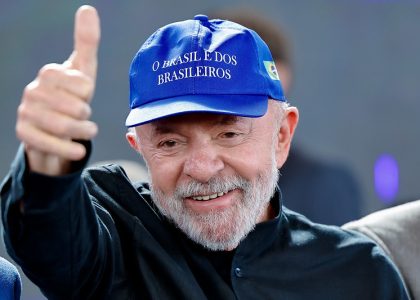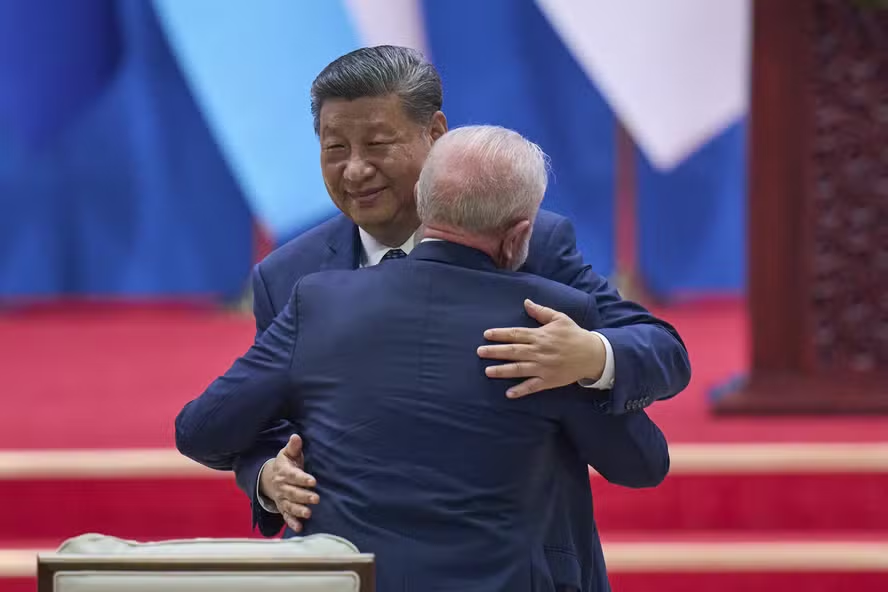
Chinese President Xi Jinping told Brazilian President Luiz Inácio Lula da Silva that Beijing supports Brazil in defending its sovereignty and rejecting external interference. During a telephone conversation, Xi also proposed stronger strategic coordination between the two countries in bilateral affairs and multilateral forums.
The exchange came as Brazil faced a widening diplomatic dispute with Argentina. President Javier Milei had attacked Lula and other Brazilian authorities during a political event in São Paulo supporting Senator Flávio Bolsonaro, adding a new bilateral confrontation to an already complex regional environment.
Xi emphasized Brazil's international standing and influence, and endorsed a more active Brazilian contribution to regional and global peace and stability. His message placed the defense of Brazilian autonomy inside the broader strategic partnership that Beijing and Brasília have built as major emerging economies.
The Chinese president also linked the relationship to the position of the Global South. He called for China and Brazil to play a constructive role in reforming global governance, protecting international justice and coordinating more closely in institutions where developing countries seek greater representation.
The immediate dispute with Argentina escalated after Milei directed insults at Lula and criticized Supreme Federal Court Justice Alexandre de Moraes. Brazil recalled its ambassador in Buenos Aires, Julio Bitelli, for consultations and sought a meeting with Argentina's ambassador in Brasília, Daniel Raimondi, to convey its formal rejection of the remarks made on Brazilian territory.
The Xi-Lula conversation also carried a concrete commercial component. Lula said both leaders supported moving forward with negotiations on a possible agreement between China and Mercosur, the South American bloc formed by Brazil, Argentina, Paraguay and Uruguay, while preserving the flexibilities required by its members.
Brazil presented those talks as part of a policy of diversifying markets and trading partners. Lula and Xi identified artificial intelligence, satellite technology, critical-mineral processing and fertilizer trade as priority areas for deeper cooperation, connecting political coordination with industrial, technological and supply-chain interests.
No timetable or detailed negotiating framework was announced for a China-Mercosur agreement. Even so, the combination of sovereign support, multilateral coordination and sector-specific cooperation gave the call significance beyond the immediate Lula-Milei dispute and reinforced the bilateral relationship as both a diplomatic and economic instrument.