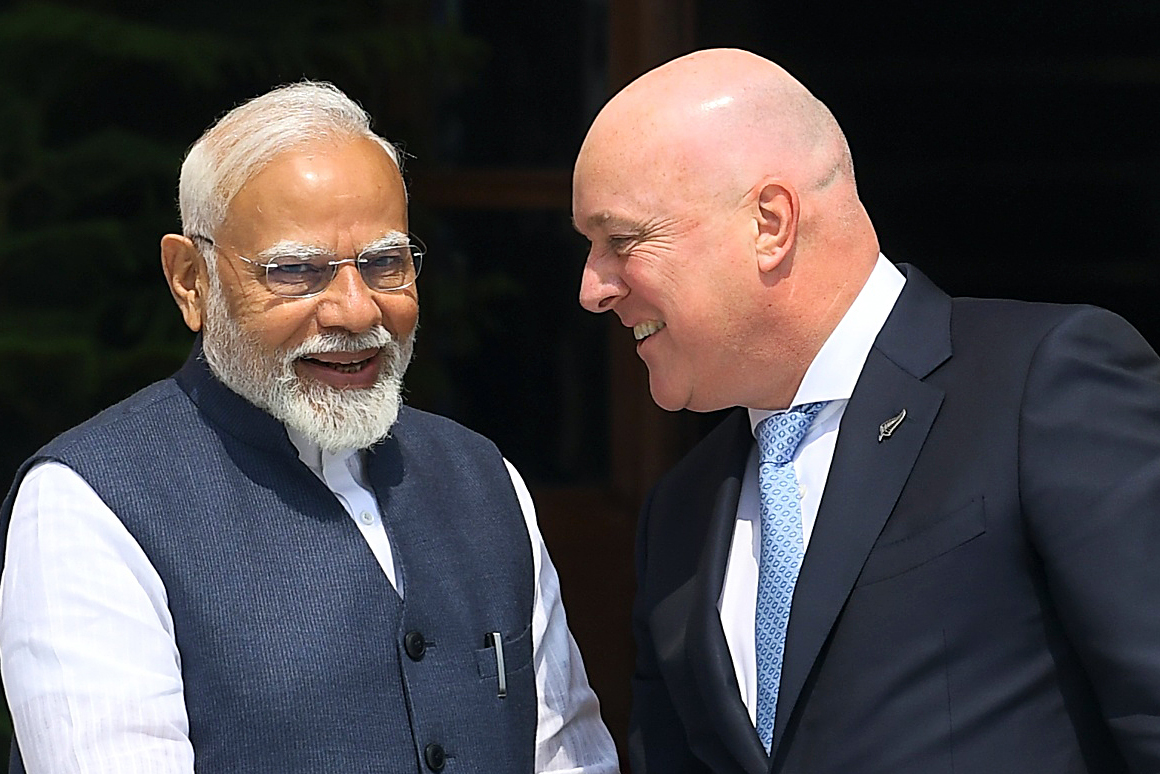
India and New Zealand moved to deepen their relationship on Saturday by announcing a strategic partnership during Prime Minister Narendra Modi's visit to Auckland, a trip presented by both governments as a way to expand cooperation beyond trade and into security, diplomacy and regional affairs.
Modi was received by New Zealand Prime Minister Christopher Luxon with a Maori welcome and a guard of honor at Government House. The visit was described as the first by an Indian prime minister to New Zealand in 40 years, giving the meeting a symbolic weight beyond the agreements announced.
The new partnership follows the signing in April of a free trade pact that still requires parliamentary approval in New Zealand. That agreement has been promoted by Luxon as a boost for the national economy, though it has also drawn resistance from some domestic sectors over provisions related to immigration and work visas for Indian nationals.
Defense and security now sit at the center of the broader agenda. The two countries said the partnership will support closer defense cooperation, including naval exercises, while also strengthening ties in trade, diplomacy, culture, sport and science.
The timing adds a wider Indo-Pacific dimension to the visit. Modi's stop in New Zealand came at the end of a tour that began on July 6 and also included Indonesia and Australia, and it followed a Chinese ballistic missile test in the Pacific Ocean that raised concern across the region.
Both governments framed the agreement around a shared interest in a free, open, peaceful and prosperous Indo-Pacific. For Wellington and New Delhi, the partnership gives a more formal structure to a relationship shaped by commerce, security concerns and the growing strategic importance of the Pacific.