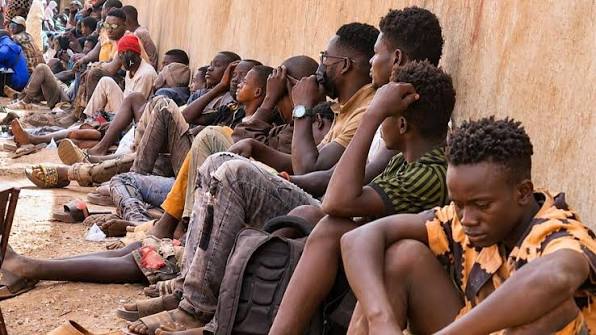
Hundreds of artisanal gold miners began leaving an assembly point in Mali after being expelled from neighbouring Guinea. Buses and trucks collected men and their luggage from the site, itself a gold mine, as Malian authorities tried to disperse a rapidly assembled population.
Mali said it had received about 160,000 expelled people since Guinea began operations against illegal mining. Officials also reported six deaths and described the influx as a humanitarian emergency, indicating that enforcement inside Guinea had quickly become a cross-border crisis.
The Guinean Defence and Security Ministries said 1,263 people had been arrested for alleged illegal gold panning. The detainees included citizens of Guinea, Burkina Faso, Mali, Togo, Niger, Ivory Coast and Ghana, showing how regional labour networks feed the mining economy.
The arrests followed a ban on unregulated and clandestine mining in the northeastern Siguiri region that took effect on November 2. Siguiri is a major gold-producing area, and the abrupt operation affected both local workers and migrants dependent on informal extraction.
Guinea's authorities are attempting to curb land degradation and water pollution associated with artisanal mining. Those environmental objectives do not remove the need for orderly enforcement, screening, shelter, transport and coordination with the governments whose nationals were displaced.
For Mali, the immediate burden includes registering arrivals, preventing family separation, treating injuries and arranging onward travel. The scale reported by Bamako far exceeds the people visible at a single assembly site and suggests pressure across multiple border communities and transport routes.
The departure of buses is therefore only the first logistical step. Guinea must clarify legal procedures and the status of seized workers, while Mali and neighbouring states need a coordinated humanitarian response that distinguishes environmental enforcement from collective expulsion.