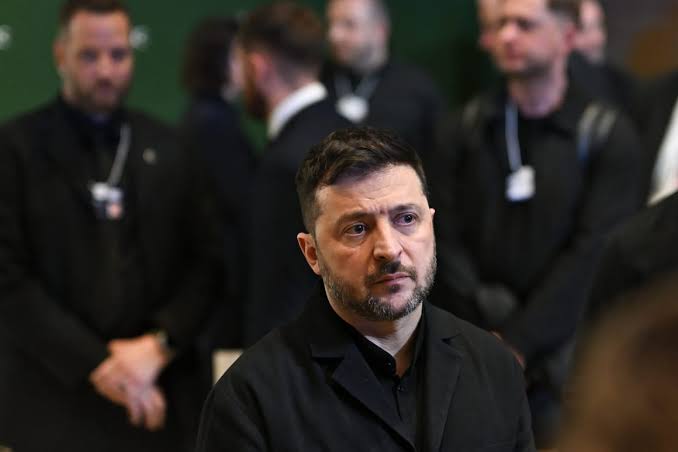
Ukrainian President Volodymyr Zelenskyy said the Abu Dhabi negotiations could produce an exchange of 1,000 prisoners for 1,000, or possibly 1,500 for 1,500. The proposed scale makes the humanitarian track the clearest potential result of the renewed trilateral process.
Zelenskyy said American representatives would carry the exchange proposal to Russia. A near-term swap had been agreed in principle after the first day, but negotiators had not publicly confirmed the final number, timing or mechanism for identifying and transferring prisoners.
Russia also raised territorial questions. Zelenskyy stressed that such decisions belong to national leaders and that Ukraine's negotiators do not hold an unlimited mandate, drawing a boundary between technical bargaining and concessions requiring political authorisation.
European participation is another Ukrainian priority. Zelenskyy said Kyiv wants a common position among the European Union, the United States and Ukraine, because any settlement would shape European security guarantees, reconstruction responsibilities and the credibility of future deterrence.
The second day was expected to address de-escalation, energy infrastructure, the Black Sea, the prisoner exchange and the possibility of a leaders' meeting. Each subject demands verification: protected sites, navigation rules and ceasefire steps cannot depend only on declarations.
The first session lasted about four hours and also covered guarantees for Ukraine, Russia's own security demands, economic reconstruction and a new European security architecture. Those files expose a crisis of trust that a humanitarian agreement alone cannot resolve.
Ukraine's delegation includes Rustem Umerov and Kyrylo Budanov, while Vladimir Medinsky leads Russia's team and Steve Witkoff and Jared Kushner represent Washington. The prisoner exchange is the immediate test of whether this senior group can convert contact into verifiable action.