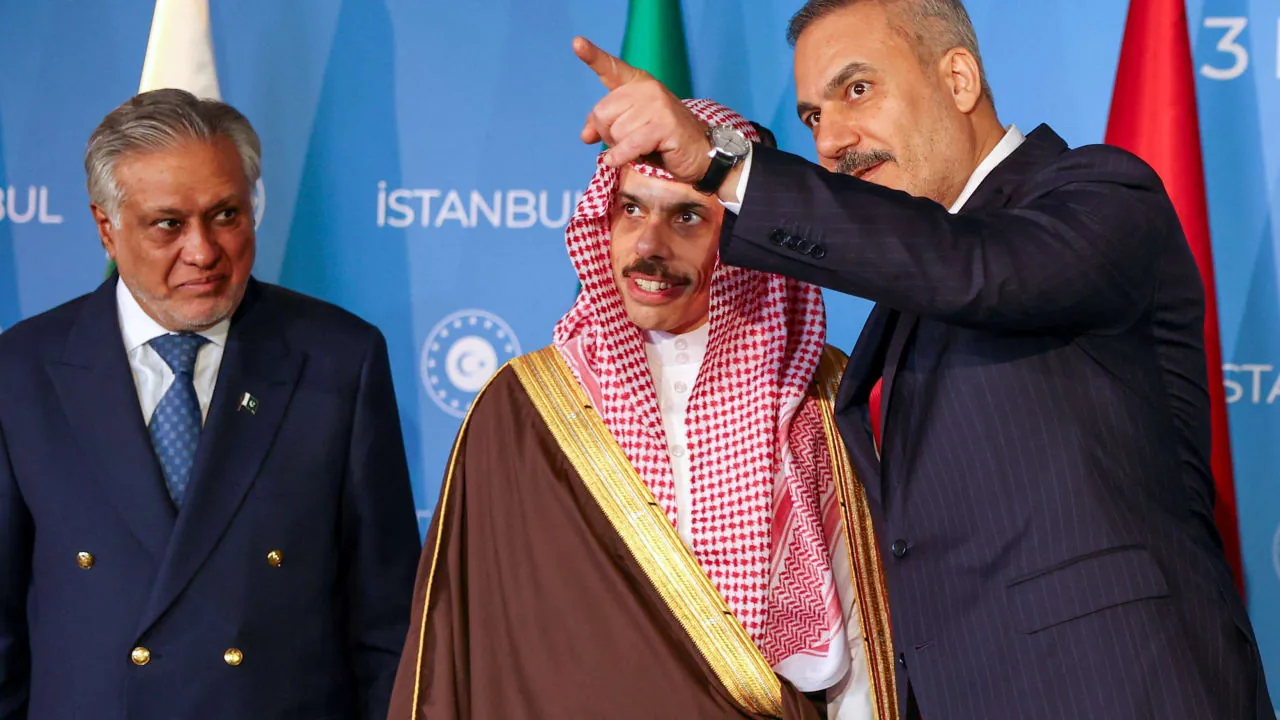
Turkey's parliament is moving to ratify the Mecca Joint Defence Agreement with Saudi Arabia and Pakistan, creating a formal mutual-defence obligation among three major military powers. The pact was signed in August and reaches the legislature as Houthi attacks increase pressure on Saudi territory and infrastructure.
Its central clause resembles NATO's Article 5 by treating an armed attack on one signatory as an attack on all. The agreement also provides for closer military coordination, intelligence sharing, defence-industrial cooperation, joint production and technology transfer over a ten-year framework.
Ratification does not automatically send Turkish forces to Saudi Arabia. Any deployment of soldiers, advisers or operators would require a separate mandate from parliament. A governing-party lawmaker said such authorisation would be submitted, while officials stressed that the scope would follow consultations and a request from Riyadh.
Turkey's initial contribution is expected to focus on military equipment, intelligence and weapons systems. Analysts say Ankara can offer air defence, electronic warfare, training, logistics and combat experience, creating a model in which a supplier provides an integrated defence service rather than isolated platforms.
Defence Minister Yaşar Güler has said Turkey does not expect its troops to conduct offensive operations against the Iran-backed Houthis. Even so, personnel may be needed to install and operate complex systems, and the distinction between technical support and participation could narrow if attacks intensify.
The agreement also introduces interoperability among Turkey, Saudi Arabia and Pakistan, which use some similar equipment and have complementary industrial capabilities. At the same time, their different relationships with Iran, India, Afghanistan and Western alliances create potential obligations beyond the immediate Saudi security crisis.
The pact's deterrent value depends on clarity about consultation, command and thresholds for assistance. A broad collective-defence promise can discourage attacks, but ambiguity may also draw members into conflicts they did not choose. Parliamentary scrutiny of deployment rules will therefore matter as much as ratification itself.