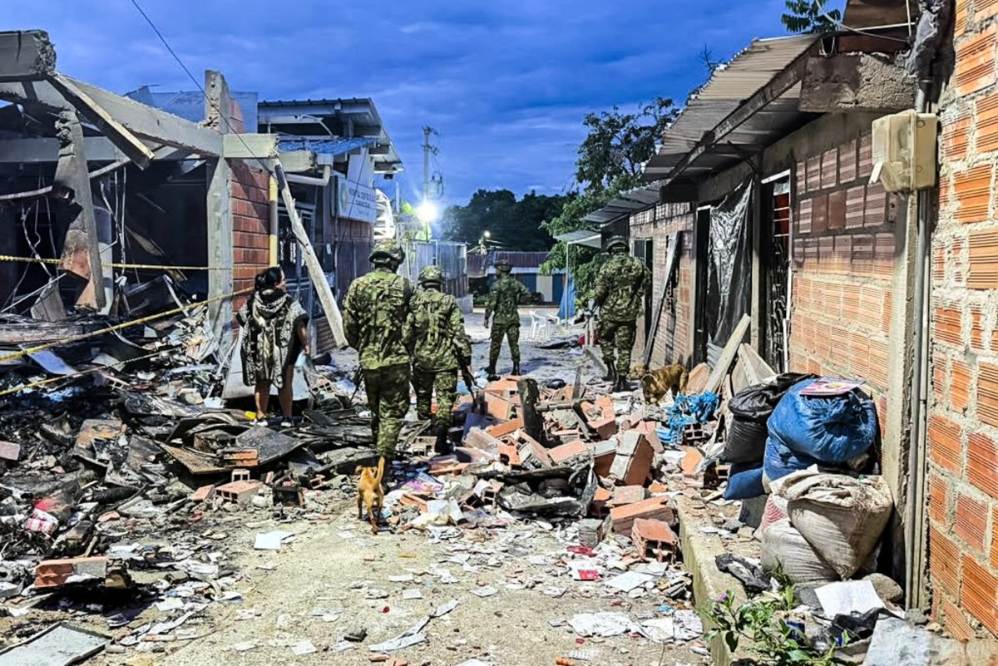
An attack on a military base in Planadas, southern Colombia, killed four civilians, including a two-month-old baby. Unidentified assailants fired improvised rockets made from gas cylinders on Sunday night, but several projectiles missed the base and struck civilian buildings across the town.
Planadas Mayor Juan Camilo Hueje said the local hospital and nearby homes were hit, forcing authorities to use a school to treat the injured. The strike endangered patients and medical personnel and turned a military assault into a broader violation affecting families with no role in the conflict.
President Abelardo de la Espriella promised to use the full capacity of the state against armed structures. He said the government would continue bombing military targets, intensify special operations and reactivate aerial spraying of coca fields, reinforcing the coercive strategy adopted after he took office in August.
Human Rights Ombudswoman Iris Marín said two rebel groups have fought for control around Planadas since 2022. Violence increased as the military targeted illegal gold mines near the town, connecting the local confrontation to armed financing networks rather than a single isolated attack.
Marín classified the strike as an infringement of international humanitarian law. The use of inaccurate improvised rockets in a populated area makes civilian harm foreseeable, and damage to a functioning hospital carries particular legal significance even when the intended target is a military installation.
The region had experienced lower violence after the 2016 peace agreement with the FARC, but smaller rebel organisations and drug-trafficking groups moved into territory the former guerrilla force abandoned. De la Espriella later suspended talks with remaining groups and increased airstrikes and infrastructure-protection operations.
Conflict-monitoring group ACLED counted 34 bomb or explosive attacks by state forces and illegal armed groups during the four weeks ending October 16, nine per cent above the previous year's four-week average. Planadas shows the central risk of escalation: greater military pressure can disrupt armed networks while also provoking indiscriminate retaliation against towns.