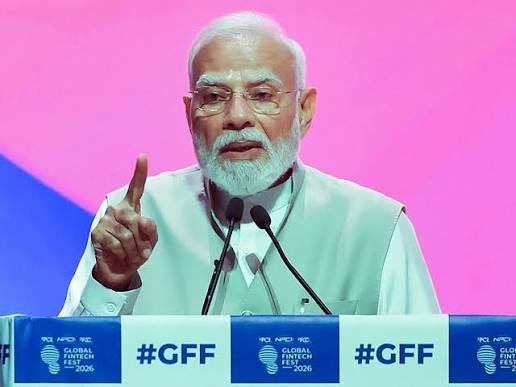
Prime Minister Narendra Modi called for India's Unified Payments Interface to connect with payment systems in more countries, presenting international interoperability as the platform's next stage. He made the proposal at a financial-technology conference in Mumbai and linked it to India's broader ambitions in digital infrastructure.
UPI is operated by the National Payments Corporation of India and ranks as the world's largest retail fast-payment system by transaction volume in a 2025 International Monetary Fund assessment. In August alone, it processed 24.51 billion transactions worth 29.82 trillion rupees, equivalent to about $314.21 billion.
The network is already live in 11 countries, Modi said, with Singapore, the United Arab Emirates, France and Nepal among the participating markets. Existing arrangements vary between merchant acceptance and direct connections with domestic payment rails, so international availability does not take a single uniform form.
The 2023 linkage between UPI and Singapore's PayNow offers a model for deeper interoperability. It enables users to send money rapidly through a mobile number or Virtual Payment Address, reducing the information and procedural friction normally associated with cross-border transfers.
Modi said further expansion should focus on countries with large Indian diaspora populations and substantial trade relationships with India. Linking national payment networks could lower the portion of workers' remittances lost to transaction fees and deliver funds to families more quickly.
The government and the Reserve Bank of India have promoted cross-border UPI use for travelers, overseas workers and commercial transactions. Their objective is to allow payments connected to Indian rupee accounts while reducing settlement friction, though every new corridor still requires regulatory, technical and banking coordination with the partner country.
India's international push comes as the domestic rules are also evolving. Parliament approved payment-law changes last month that opened a path to reintroducing merchant fees on UPI transactions, showing that continued growth will involve choices about financing, access and incentives alongside the technical work of connecting more national systems.