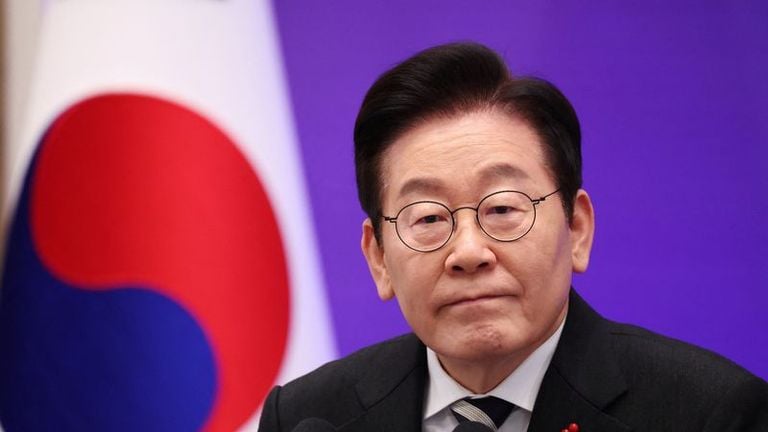
Brazil and South Korea agreed in Brasília to form a working group to accelerate negotiations on a trade agreement between Seoul and Mercosur. Brazilian President Luiz Inácio Lula da Silva announced the mechanism alongside South Korean President Lee Jae Myung, who described concluding a deal as urgent.
Mercosur comprises Brazil, Argentina, Paraguay and Uruguay. A South Korea agreement would add another Asian track to the bloc's external trade strategy after deals with the European Union and the four European Free Trade Association members: Switzerland, Iceland, Liechtenstein and Norway.
Brazil is pursuing new agreements both nationally and through Mercosur to diversify its commercial relationships. The effort has gained urgency as U.S. tariffs affect Brazilian exports and increase the value of access to additional markets and investment partners.
The South Korean initiative forms part of a wider series of Brazilian contacts. Earlier the same day, Lula and Chinese President Xi Jinping supported progress toward a possible China-Mercosur agreement, broadening the bloc's engagement with major Asian economies.
The Brasília talks also addressed access for Brazilian food exports. Lula said a South Korean mission would travel to Brazil the following month to conduct sanitary evaluations of meat-processing facilities, a technical step needed before wider market entry.
Critical minerals became the second major sector in the bilateral agenda. Lee said both governments agreed to expand cooperation, linking Brazil's resource base with South Korea's industrial and technology supply chains.
The meeting followed a summit between Lula and Lee in Seoul five months earlier. Establishing the working group gives the trade discussion an institutional channel, but neither leader announced a negotiating calendar, market-access terms or a deadline for concluding an agreement.
Progress will depend on coordination among all four Mercosur members and on resolving sector sensitivities inside both markets. The combination of trade talks, sanitary inspections and minerals cooperation nevertheless gives Brazil and South Korea several parallel routes for deepening economic ties while reducing exposure to a narrower set of partners.