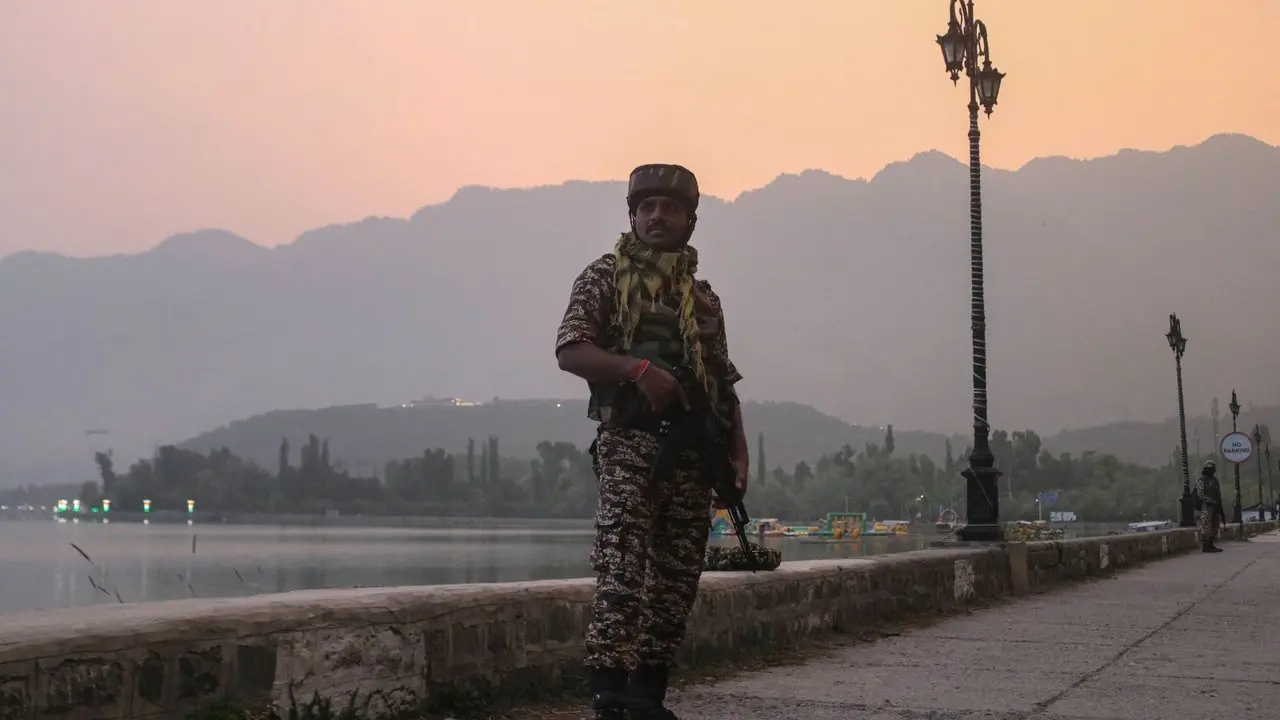
India has formally objected to Chinese projects on territories in Jammu and Kashmir and Ladakh that New Delhi claims as its own. Foreign Ministry spokesperson Randhir Jaiswal framed the issue as a violation of Indian sovereignty during a weekly briefing.
Jaiswal said India does not violate China's sovereignty and has maintained a consistent position. He argued that China has occupied Indian territory in the two areas since 1963 and that projects operating there are therefore subject to an Indian objection.
The remarks followed a meeting between Indian External Affairs Minister S. Jaishankar and Chinese Foreign Minister Wang Yi on the sidelines of an ASEAN summit in Manila. The sequence placed a persistent territorial dispute next to a diplomatic effort to stabilize bilateral relations.
Wang said meetings between President Xi Jinping and Prime Minister Narendra Modi in Kazan and Tianjin had guided relations back toward improvement and development. He described the two countries as partners rather than competitors and as opportunities rather than threats.
The Chinese assessment pointed to resumed institutional exchanges, calm in border areas and bilateral trade reaching a new high. Wang said those gains had been difficult to obtain and should be preserved.
He also proposed closer high-level contact and broader cooperation in trade, media and people-to-people exchanges. Sensitive issues, he said, should be handled properly while the two neighboring powers search for a model of peaceful coexistence based on respect, trust and common development.
India's sovereignty objection shows that the diplomatic recovery does not remove the territorial question from the relationship. Cooperation and dispute management are advancing in parallel, leaving both governments to protect recent engagement while maintaining incompatible positions over contested land.