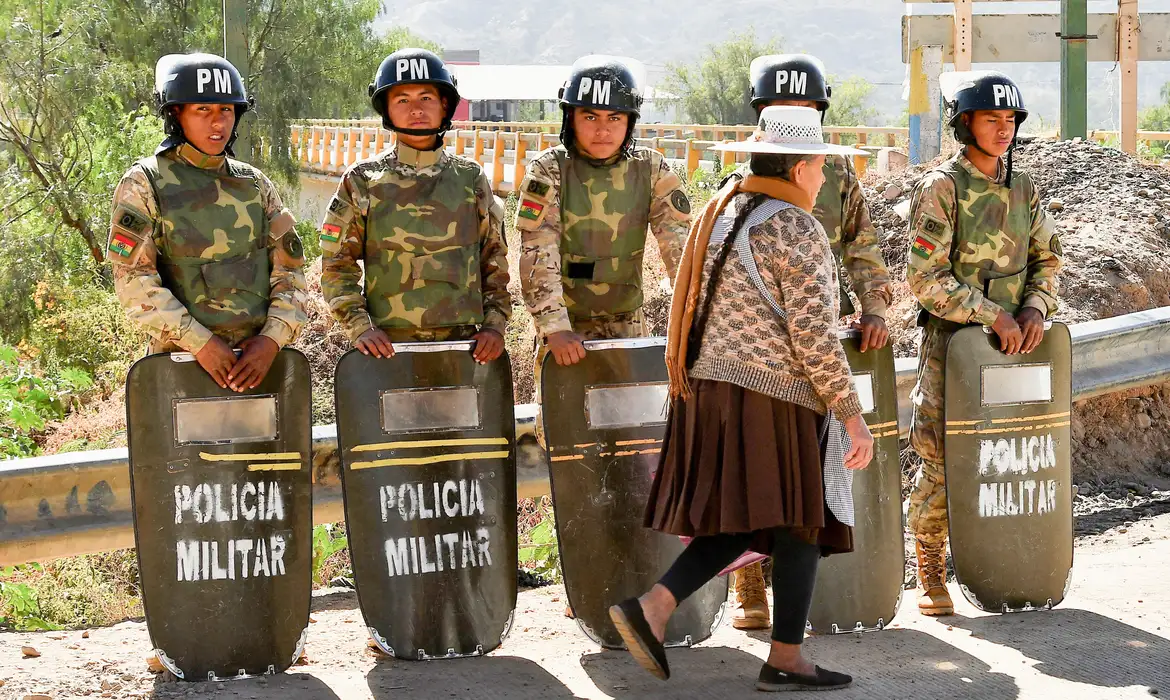
Road blockades across Bolivia declined substantially after the government reached an agreement with the Bolivian Workers' Center and introduced a state of emergency following 50 days of protests. The number of blocked routes fell from more than 80 on some recent days to 31 early Sunday and then to 12 later in the day.
The emergency measure, confirmed by parliament in the early hours of June 21, allows the government to impose curfews in selected areas and deploy the armed forces. The protests have opposed the policies of President Rodrigo Paz and intensified after the approval of a land law criticised by peasant organisations.
One day before the emergency decree, Paz signed an agreement with the Bolivian Workers' Center, the country's main trade union federation. Its president, Mario Argollo, said the arrangement would be tested over 90 days and urged other groups to lift their blockades to help pacify the country.
The agreement includes commitments not to criminalise protests or persecute social and union leaders. It also establishes a joint commission to address the release of leaders detained during the demonstrations and rules out the privatisation of strategic public companies or the transfer of national resources to private interests.
Paz said the government would strengthen state mining and employment while maintaining coordination with the Bolivian Mining Corporation. At the same time, he described the roadblocks as part of an organised destabilisation effort linked to narcoterrorism, an accusation presented without evidence in his public remarks.
The government has also blamed former president Evo Morales for the unrest. Morales rejected that claim and said the mobilisation brings together teachers, miners, peasants, Indigenous communities and other social groups beyond his control.
Divisions remain within the protest movement. Some organisations, including the Bartolina Sisa national federation of Indigenous peasant women, continue to demand Paz's resignation and oppose ending the blockades, leaving the political crisis unresolved despite the reduction in road disruptions.