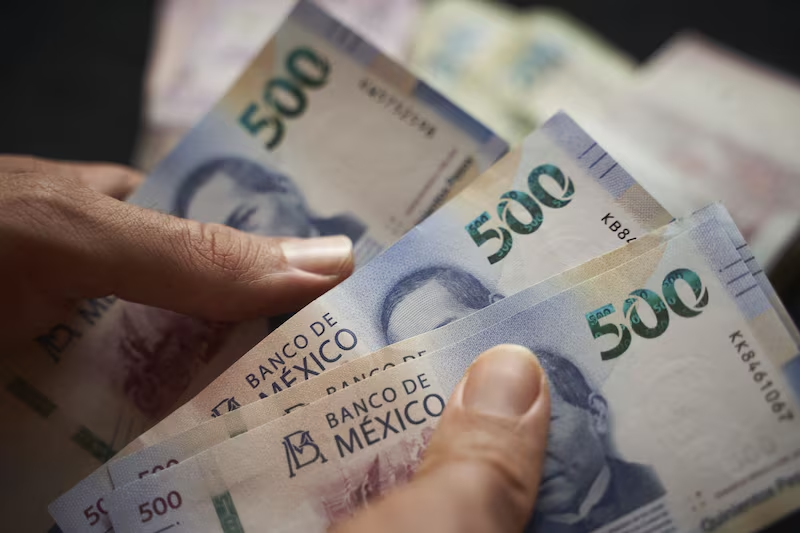
The Mexican peso ended the session under renewed pressure, with the exchange rate near 17.62 pesos per dollar and the currency losing about 0.3% on the day. The move came despite evidence that headline inflation had slowed, a combination that challenges the assumption that better domestic price data should automatically support the currency.
The divergence reflects the different time horizons followed by inflation indicators and foreign-exchange markets. Consumer prices describe the recent path of the domestic economy. Currency traders, by contrast, price expectations about future interest rates, global risk appetite and the relative strength of the dollar across several markets at once.
Slower headline inflation can therefore produce an ambiguous signal. It reduces immediate pressure on household purchasing power, but it can also reinforce expectations that monetary policy will remain unchanged for longer or eventually become less restrictive. If the expected interest-rate advantage of peso-denominated assets narrows, part of the currency's previous support may weaken.
The composition of inflation also matters. A softer overall reading does not eliminate concern when underlying price pressures remain persistent. That distinction limits how quickly monetary authorities can declare the inflation problem contained and leaves investors balancing two competing narratives: gradual disinflation and continued caution over core prices.
External conditions can dominate both narratives in a single trading session. A broadly stronger dollar, adjustments in other major currencies and lower demand for emerging-market assets can push the peso down even when Mexico's own data appear constructive. The peso's liquidity makes it one of the first regional currencies used by investors to express changes in global sentiment.
The day's decline is therefore less a rejection of Mexico's disinflation process than a reminder of its limits as a currency shield. Domestic stability can improve the peso's medium-term foundation, but daily performance will continue to depend on the global dollar cycle, monetary expectations and the willingness of investors to hold risk across emerging markets.