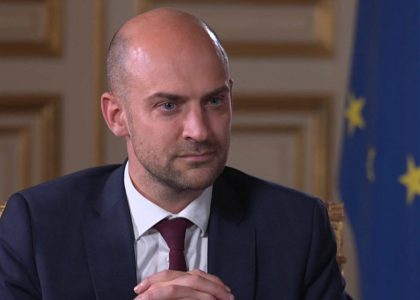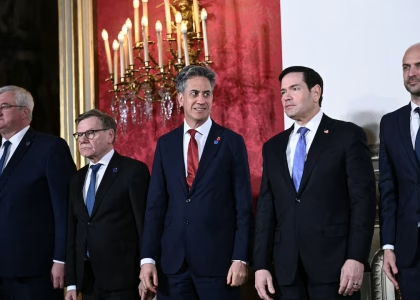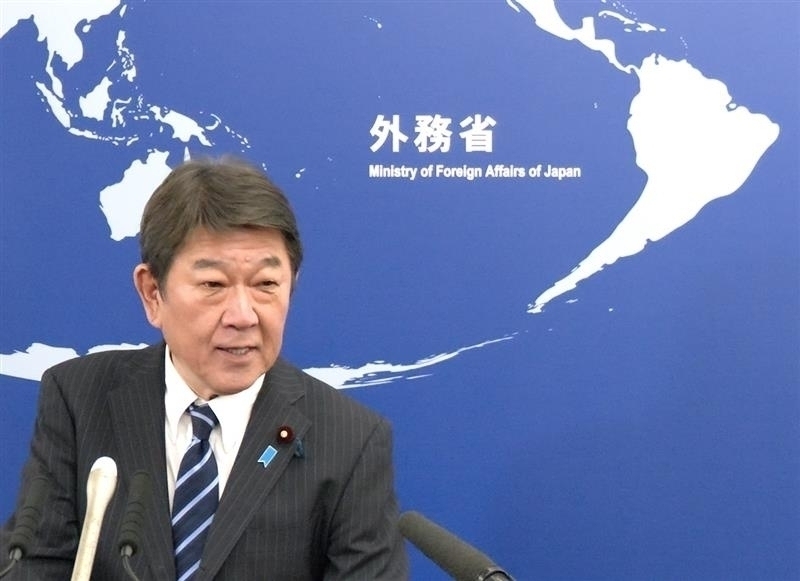
Japanese Foreign Minister Toshimitsu Motegi met French counterpart Jean-Noël Barrot in Paris during the G7 ministerial meeting, combining strategic coordination with a direct Japanese complaint about European industrial policy. The 25-minute exchange treated economic rules and security as connected files.
Barrot described France and Japan as exceptional partners sharing values and principles. Motegi emphasised France's role as an Indo-Pacific country and argued that the two governments should coordinate more closely as uncertainty grows across the international order.
The most concrete disagreement concerned the European Union's proposed Industrial Accelerator Act. Motegi repeated Japan's serious concerns and asked France to support an appropriate response, building on earlier discussions between the two countries' leaders.
The ministers agreed to continue consultations, but no exemption, amendment or timetable was announced. Japanese companies will therefore watch whether European local-content or industrial-support rules alter their access to projects and procurement inside the single market.
Security discussions covered Ukraine and the Indo-Pacific, including North Korea's nuclear and missile programmes and the unresolved abductions issue. The agenda reflects the growing overlap between European and Asian security as governments link supply chains, deterrence and sanctions policy.
France's overseas presence and military capabilities give it a distinct Indo-Pacific position among European states. Japan, meanwhile, gives Paris a major regional partner able to connect European initiatives with Asian institutions and operational realities.
Motegi's meeting produced a commitment to consult rather than a settlement. The next evidence will be France's position on the industrial act and sustained G7 coordination on Ukraine and North Korea, where shared language matters only if it supports compatible policy.