
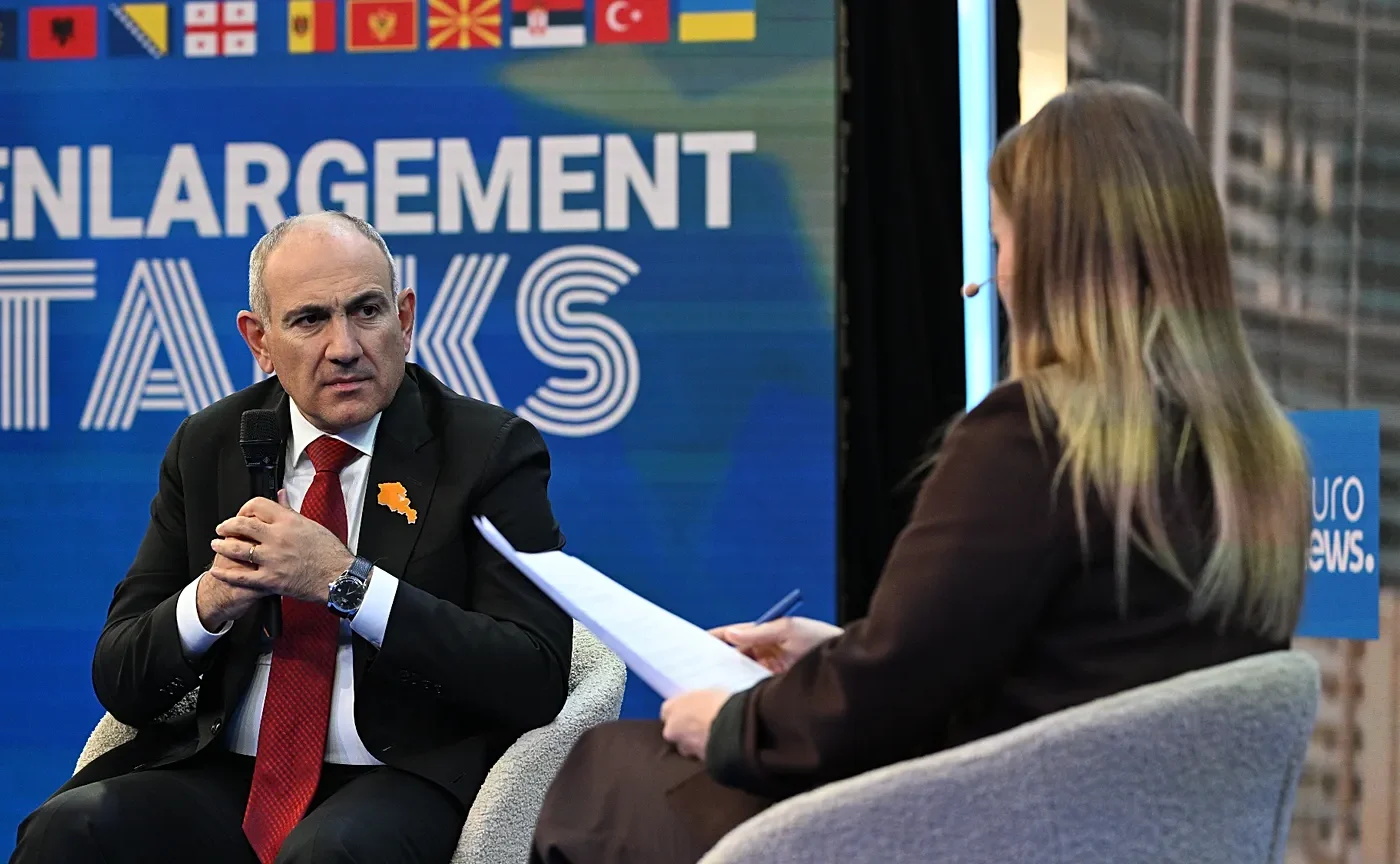
Armenian Prime Minister Nikol Pashinyan says his government expects the current European integration process to lead to a formal application for European Union membership in 2027 or 2028. The timetable turns a broad westward orientation into a potential institutional decision, but it is not yet an accession negotiation.
Armenia adopted a law in April 2025 launching a process toward EU membership. That law did not constitute a formal application, and the latest European Commission enlargement report offered accelerated paths to several existing candidates without giving Yerevan a comparable timetable or guarantee of acceptance.
Pashinyan said Armenia was not preparing to leave the Russian-led Eurasian Economic Union. He argued that the government first needed to create a real alternative and complete procedural steps before citizens could decide between the two systems in a referendum. Simultaneous membership is generally considered incompatible.
The economic constraints are substantial. Russia remains Armenia's largest export market and main gas supplier, including through preferential prices. Moscow has already restricted some Armenian agricultural imports and warned that closer EU alignment could alter energy and trade benefits, giving it leverage over the pace of change.
Security relations have deteriorated in parallel. Armenia froze participation in the Russian-led Collective Security Treaty Organization after accusing Moscow of failing to support it during confrontations with Azerbaijan and the loss of Armenian control over Nagorno-Karabakh. Pashinyan says Yerevan's interest in the alliance has ended.
The government presents closer EU ties as a way to protect democratic reforms and diversify external relationships. Visa liberalisation, targeted for 2029, is a nearer milestone. Yet European membership would require extensive regulatory alignment, political consent from all member states and a credible adjustment plan for trade and energy.
The 2027–28 target is therefore a strategic signal rather than a guaranteed destination. Armenia must build domestic support, reduce vulnerabilities and secure a positive European response before applying. Moving too slowly could erode credibility, while moving without alternatives could expose the economy to abrupt Russian retaliation.
