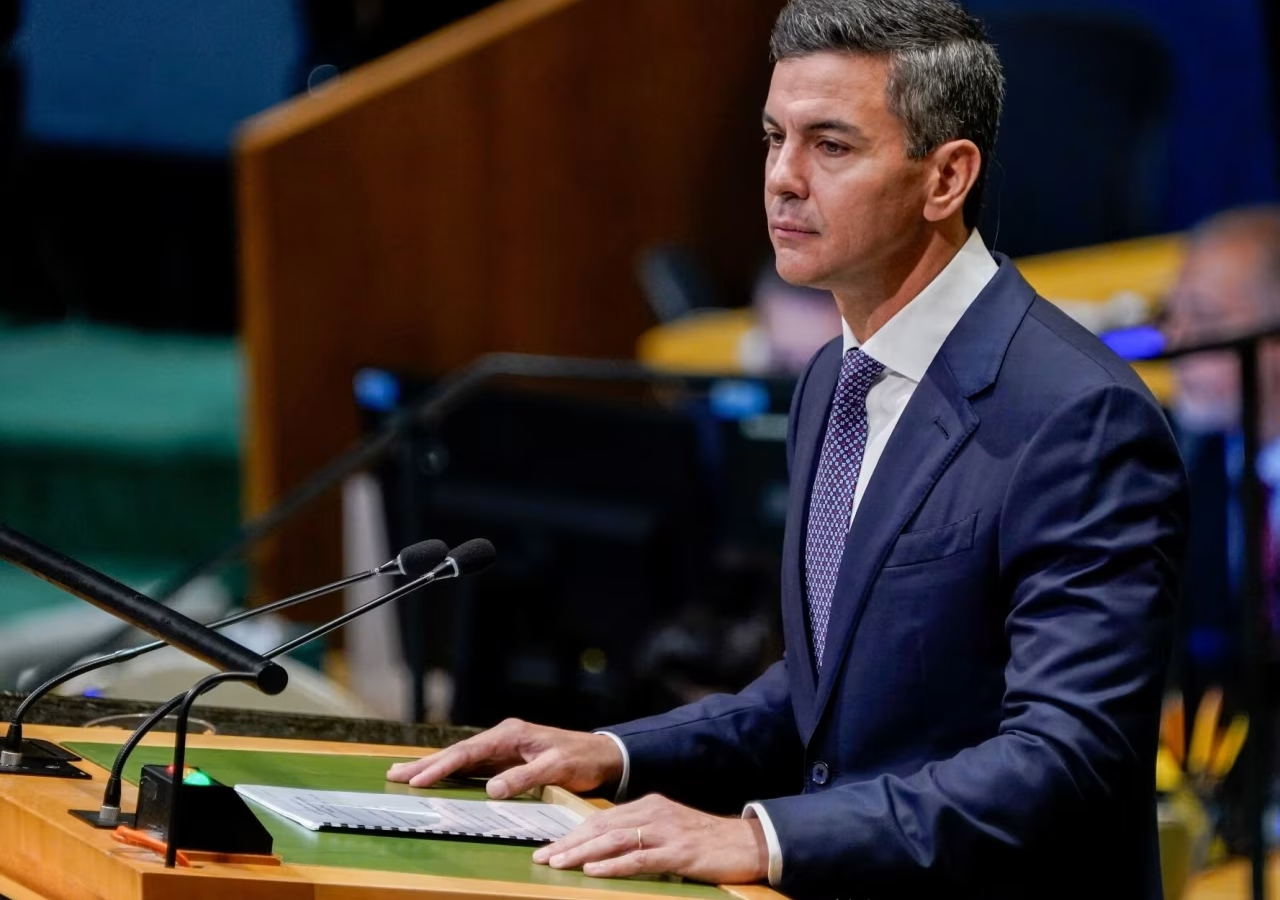
Paraguayan President Santiago Peña resigned after the collapse of Ueno Bank triggered a financial and political crisis, leaving roughly three million customers unable to use their accounts. He stepped down hours before lawmakers advanced impeachment and after losing support inside his own Colorado Party.
The central bank intervened after Ueno breached minimum solvency requirements. Arrest warrants were issued for eight executives, who later surrendered, and the central bank chief also left office. Authorities say deposit insurance covers most individual savers, but payment timing and larger balances remain uncertain.
Ueno had expanded from a niche financial company into a mid-sized digital bank serving close to half the national population. It administered about $850 million in public money, including pension and state-institution funds, making its failure a direct threat to household liquidity and confidence in public management.
Opposition lawmakers accused Peña of conflicts of interest, misuse of pension resources and shielding the bank from scrutiny. The president denied wrongdoing and said courts should handle a regulatory failure. He previously held an investment in Grupo Vázquez, the group that owned Ueno until March 2025.
Peña said he would appear before Senate proceedings to defend himself and urged authorities to clarify the facts while restoring payments. His resignation did not end the legal process: prosecutors opened a criminal investigation, and lawmakers continued to demand accountability for regulatory and political decisions.
Markets reacted immediately. Paraguay's guaraní weakened nearly five per cent and crossed 6,500 to the dollar before recovering slightly, while sovereign bond prices fell. The movements challenged the country's reputation for macroeconomic stability and the investment-grade status it achieved after years of reform.
Vice President Pedro Alliana is next in the constitutional line, but succession alone cannot reopen accounts or repair supervision. The government must separate insured deposit repayment from investigations, disclose the treatment of public funds and demonstrate that Ueno's collapse will not spread through the wider banking system.