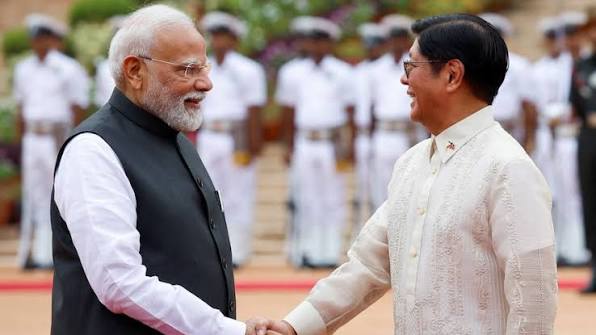
India and the Philippines are in final-stage negotiations for an expanded sale of BrahMos supersonic cruise missiles as deliveries under their 2022 agreement approach completion. The proposed purchase would substantially increase Manila's coastal-defence inventory and deepen India's role as a regional arms supplier.
The Philippines is expected to seek about five systems and nearly 60 missiles in a package valued between $700 million and $800 million, according to sources familiar with the talks. That would be roughly twice the value of the earlier $375 million naval-use order.
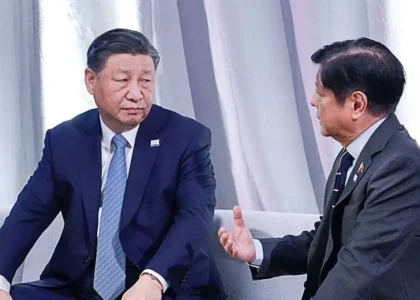
Philippine President Ferdinand Marcos Jr has expressed interest in additional units. Defence Secretary Gilberto Teodoro said Manila had submitted a wish list so the system could be adapted to the Philippine environment, indicating that negotiations cover configuration and support rather than simply the number of missiles.
BrahMos was developed jointly by India and Russia and can be launched from land, sea and air platforms. Its speed and range make it useful for coastal denial, allowing the Philippines to threaten vessels approaching strategically important areas without matching China ship for ship.
The potential order comes as confrontations with Beijing intensify around disputed features in the South China Sea. A larger missile force would strengthen deterrence, but it would also require surveillance, targeting, secure command networks and dispersed launch positions to remain credible in a crisis.
International demand increased after India used BrahMos in combat during its four-day conflict with Pakistan in 2025. New Delhi has since announced supply arrangements with Indonesia and Vietnam and is discussing possible sales with the United Arab Emirates, Thailand, South Africa and Brazil.
India's defence exports reached 384.24 billion rupees, about $4.11 billion, in the fiscal year to March, an increase of more than 62 per cent. The Philippine deal would reinforce that growth, but performance will depend on delivery, training, maintenance and the ability to tailor a complex joint Russian-Indian system for multiple foreign users.