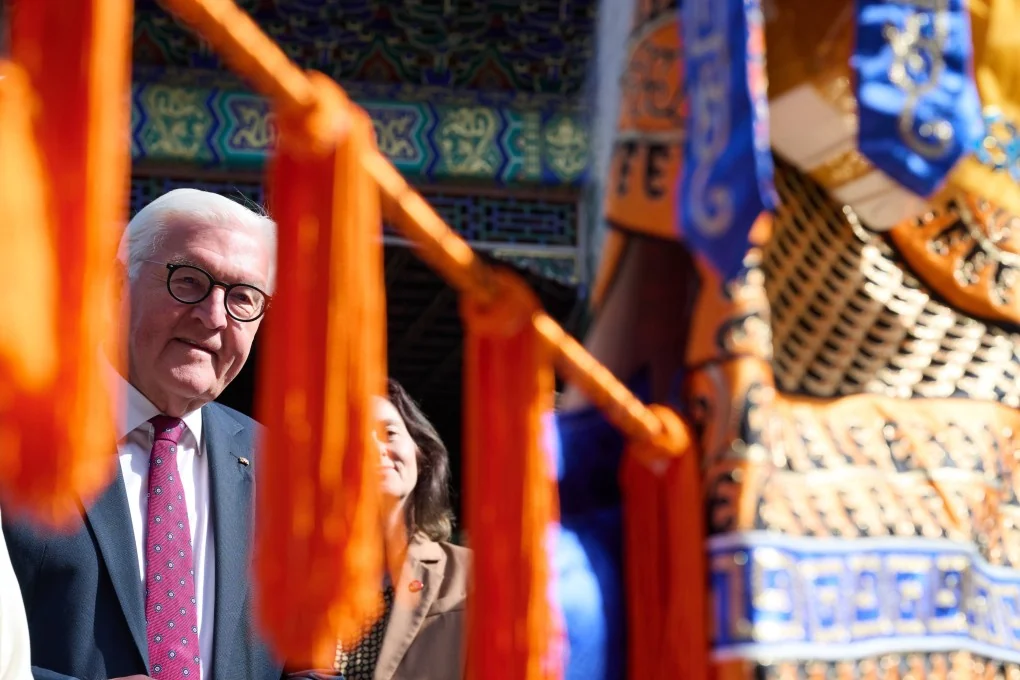
German President Frank-Walter Steinmeier urged China to reduce the widening imbalance in bilateral trade during talks with Xi Jinping in Beijing. Germany recorded a deficit of nearly €90 billion with China in 2025, a figure that has sharpened political concern over market access and industrial competition.
German statistics put Chinese exports to Germany at about €170 billion last year, compared with German sales of €81.3 billion to China. Steinmeier said close economic relations must generate sustainable benefit for both sides and that the conditions governing them require regular review.
The German president arrived with a conciliatory example. He said a recent arrangement limiting exports of Chinese hybrid vehicles to the European Union showed that difficult trade disputes can be managed through negotiation rather than an escalating cycle of restrictions.
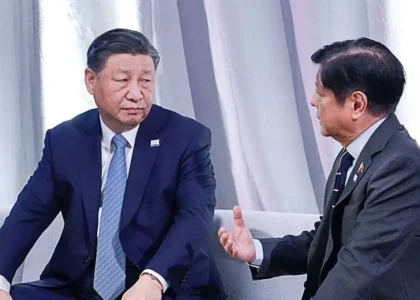
Xi called for a relationship defined by equality, mutual benefit and strategic stability. He urged Germany to pursue a rational and friendly China policy, while Beijing said it was willing to import more high-quality German products and expand cooperation in automobiles, chemicals, artificial intelligence, digital industries and green technology.
Steinmeier also placed commerce inside a broader political argument. At Peking University and in his meeting with Xi, he defended a rules-based international order, free trade and international law, and said China carries responsibility for helping prevent or mediate conflicts in Ukraine, Sudan and the Middle East.
The visit was the first by a German federal president in almost eight years and Steinmeier's eighth trip to China over a quarter-century. He met Premier Li Qiang as well, closing a four-day state visit that included discussion of electric-vehicle development and technological cooperation.
The immediate outcome is a pledge to keep dialogue open, not a mechanism that will erase the deficit. Progress will be measured through concrete purchases, market-access decisions, treatment of Chinese firms in Germany and resolution of EU trade cases, rather than through the balanced language of the state visit alone.