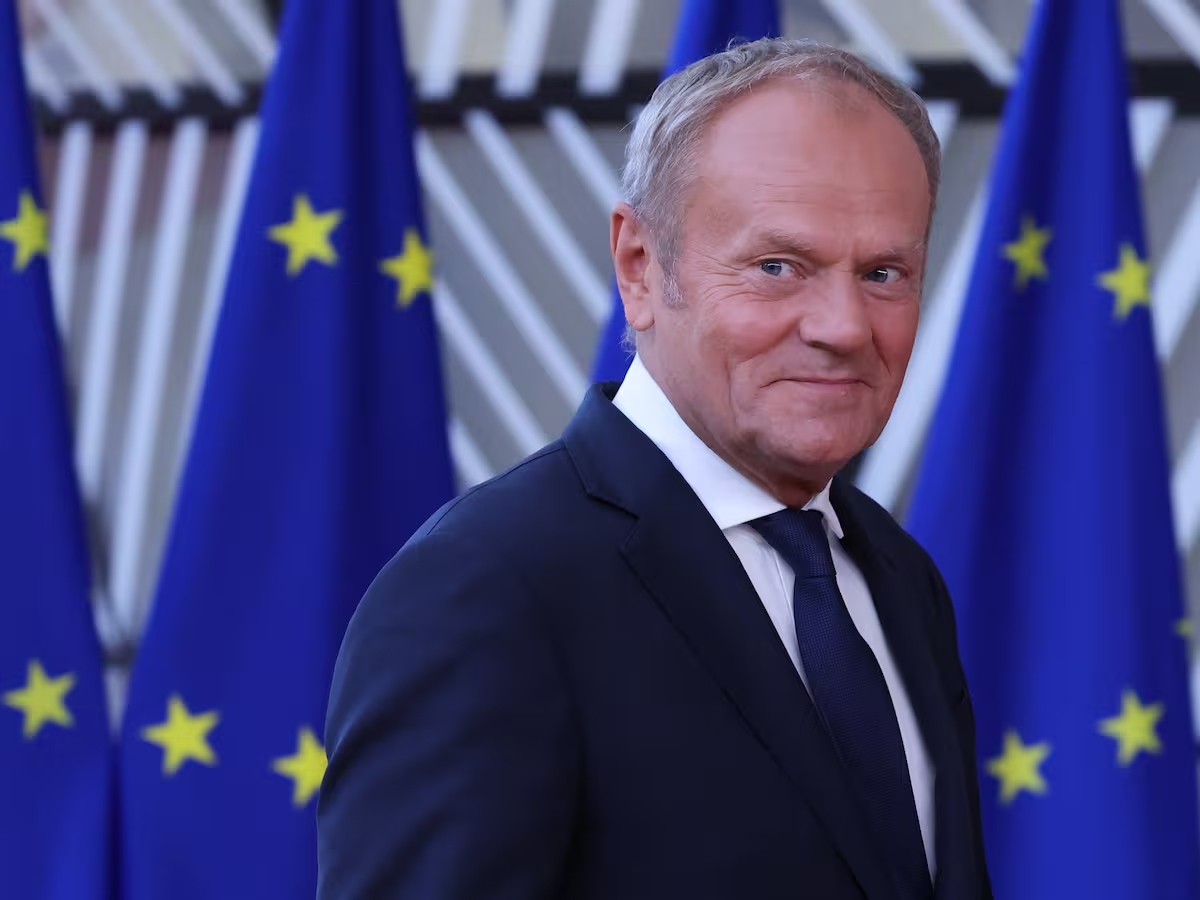
Poland reinforced security along its frontier with Russia's Kaliningrad exclave after guards detected people moving with flashlights near the border shortly after midnight. Prime Minister Donald Tusk described the episode as a possible provocation and said Polish services had prevented the situation from developing further.
The activity was recorded in the northeastern region of Warmia-Masuria, one of two areas placed under heightened scrutiny. Police, soldiers, border guards and intelligence personnel also intensified operations in Podlaskie, which borders Belarus and has already faced years of pressure linked to irregular migration and cross-border incidents.
Tusk said police were coordinating a special operation and that additional officers, troops and counterterrorism units had been moved into the two regions. The deployment followed precise intelligence suggesting that acts of diversion, sabotage or even a small armed incursion could be attempted during the first half of November.
The government did not identify the individuals seen near the frontier or present evidence that they had crossed it. That uncertainty is central to the response: Warsaw is treating ambiguous movement as a security warning while avoiding a public claim that Russia directly ordered or carried out an attack.
Polish officials say the alert is supported by information from allied services, including NATO members, Ukraine and the United States. NATO's top military commander in Europe, General Alexus Grynkewich, also warned in October that Russia could test the alliance through sabotage, covert action or a deliberately confusing border episode.
Kaliningrad gives the incident particular strategic weight. The heavily militarised Russian territory sits between Poland and Lithuania and borders the narrow Suwalki corridor, the land connection between the Baltic states and the rest of NATO. Even a limited disturbance can therefore generate military and political consequences beyond the immediate area.
Poland's challenge is to deter infiltration without allowing an unverified incident to trigger uncontrolled escalation. The reinforced patrols, shared intelligence and centralised police command are designed to close operational gaps while preserving time for attribution before Warsaw decides whether the event requires a national or allied response.