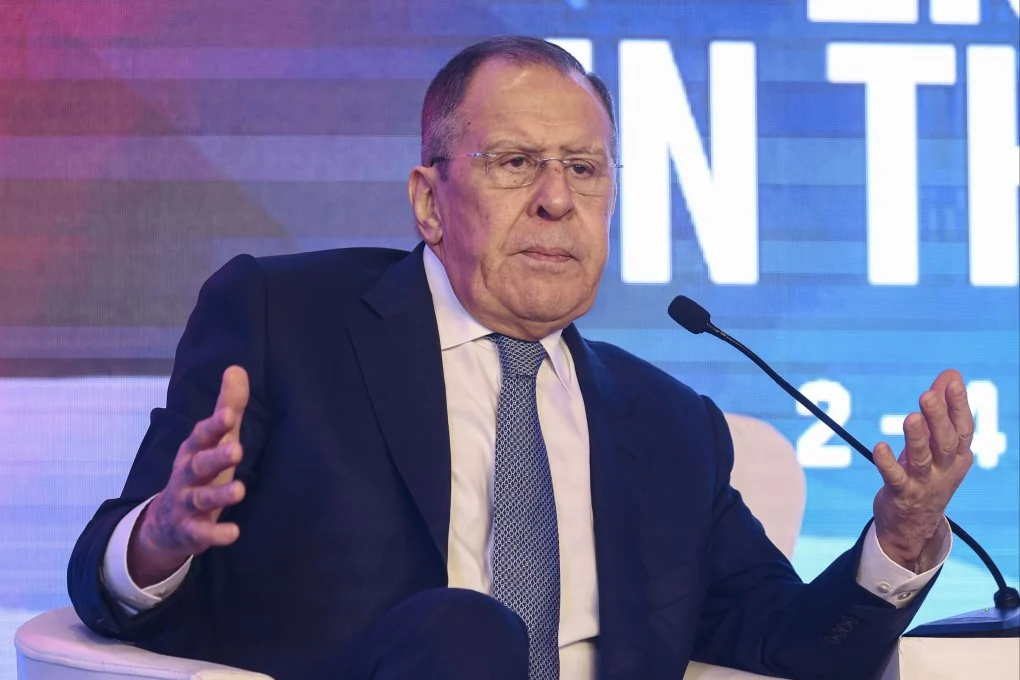
Russia's overnight diplomatic messaging paired a conditional opening to Ukraine with evidence that the wider confrontation remains unresolved. Foreign Minister Sergey Lavrov said Volodymyr Zelenskyy could travel to Moscow for a meeting with Vladimir Putin if the Ukrainian president wished to do so.
Lavrov framed that possibility as consistent with Putin's repeated willingness to hold a direct conversation. The statement did not specify security guarantees, an agenda or preparatory negotiations, however, and therefore amounted to an invitation rather than a scheduled peace initiative with agreed terms.
In a separate intervention, Lavrov said substantive disputes between Russia and the United States were still not being resolved. He pointed to the continuation of sanctions imposed under Joe Biden and additional restrictions targeting Russian oil companies Lukoil and Rosneft.
Washington simultaneously approved a possible $2.1 billion sale of PAC-3 interceptors for Ukraine's Patriot systems. The transaction is structured through the Foreign Military Sales programme and is to be financed by Canada, Germany, Norway and Ukrainian resources backed by a European Union loan, not the US budget.
The same overnight summary reported that residents evacuated from Oleshky during a humanitarian mission had reached temporary accommodation in Simferopol. Russian authorities said medical personnel and psychologists were assisting them, while the political and territorial circumstances surrounding the evacuation remained contested.
Russia and South Sudan also signed a military cooperation agreement during the third Russia–Africa summit. Separately, the United States, Japan and South Korea reaffirmed their objective of complete North Korean denuclearisation and called for enforcement of UN Security Council restrictions on financing nuclear and missile programmes.
Taken together, the announcements show several diplomatic tracks moving without converging. A possible leader-level meeting lacks operational detail, sanctions and arms transfers continue, and Moscow expands other partnerships. The next measure of change will be concrete scheduling, reciprocal concessions or verified implementation rather than declaratory offers alone.