
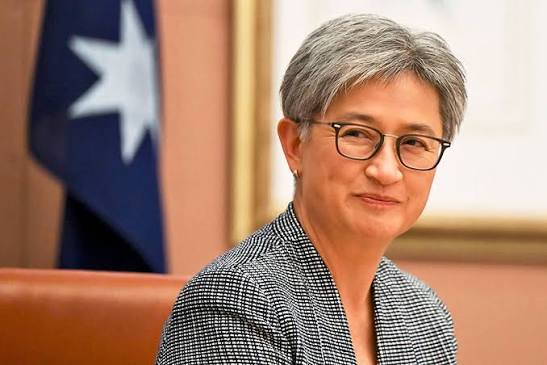
Australian Foreign Minister Penny Wong is preparing a major rebuttal to One Nation leader Pauline Hanson's call for a monocultural society, arguing that multicultural cohesion strengthens rather than weakens national security. Wong, the first Asian-Australian to serve in the federal cabinet, will make the case in an address at the Lowy Institute.
Hanson said in June that Australia should exist under a single cultural umbrella, blaming high overseas migration for eroding identity and values while acknowledging the country is multiracial. Wong characterizes that vision as a melancholic fantasy that would narrow Australians' choices, sever international connections and leave the country isolated in a dangerous world.
The foreign minister's argument treats domestic cohesion as strategic infrastructure. She warns that political attempts to set communities against one another can make Australia more hostile and weaken relationships among families, friends, colleagues and neighbours. In her formulation, deliberately dividing citizens is the opposite of patriotism because national resilience begins with how people live together.
The intervention comes as support for One Nation reaches record levels and reshapes federal competition. A July Guardian Essential poll placed the party at 25 percent of the primary vote, behind Labor on 31 percent but ahead of the Coalition on 22 percent. Labor's sharper response therefore addresses both social cohesion and a growing electoral threat.
Wong's annual Allan Gyngell lecture also reorders foreign-policy priorities around the Indo-Pacific. She points to cooperation through the Pacific Islands Forum, strengthened relations with the European Union and closer work with Quad partners as evidence that Australia is already building the networks expected of an active middle power.
The approach responds to a broader debate over the weakening of the postwar rules-based order. Canadian Prime Minister Mark Carney has called for middle powers to work together more strategically, and Wong argues Australia has pursued that task since Labor returned to office in 2022. For Canberra, diverse social and diaspora links can support trade, diplomacy and regional partnerships.
Her planned speech places resilience at the centre of the Albanese government's agenda. Countries face weaponized supply chains, disinformation and foreign interference designed to exploit internal divisions. Artificial intelligence adds an era-defining force that will rapidly reshape economies, societies and national power, bringing benefits and risks across every policy domain.
The dispute therefore extends beyond migration rhetoric. Hanson presents cultural uniformity as a route to national identity; Wong argues it would reduce Australia's relationships and capacity to act. With One Nation's support rising, Labor is converting multiculturalism from a social-policy defence into a security, economic and foreign-policy proposition tied directly to Australia's place in the Indo-Pacific.


