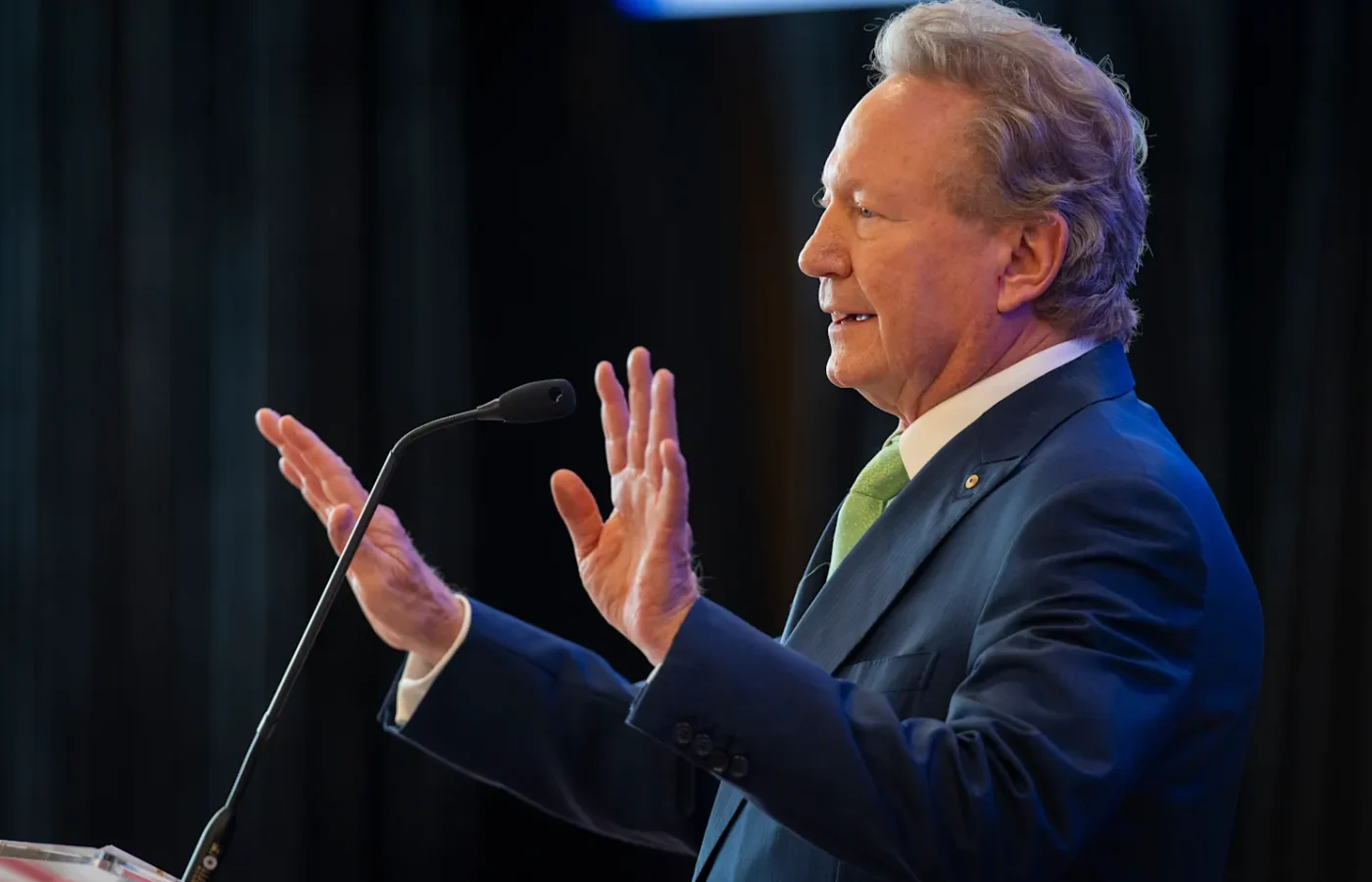
Around 200 government, business and academic representatives from Asia, Oceania and Africa met in Perth for a Boao Forum for Asia conference focused on the global green transition. The gathering in Western Australia placed energy transformation, industrial cooperation and climate governance within a shared regional agenda.
Boao Forum Secretary General Zhang Jun called for an action-oriented transition supported by international cooperation, stronger global governance and attention to social fairness. Chinese climate envoy Liu Zhenmin added energy security and sustainable economic growth to the priorities for Asia-Pacific policy.
Delegates presented China's industrial transition as a reference for scaling low-emissions technology. They highlighted tax incentives, waived license-plate fees and investment in charging infrastructure, as well as Chinese capacity in batteries, wind power, photovoltaic equipment and high-speed rail.
China's export role was quantified through wind and solar products. Liu said shipments during the 2021-2025 period helped other countries avoid approximately 4 billion tonnes of carbon emissions, placing manufacturing and trade at the center of the region's climate contribution.
Australian business leaders argued that the two economies offer complementary capabilities. Australia has extensive renewable energy potential and mineral resources, while China brings large supply chains, manufacturing scale, technology and experience developing infrastructure.
Fortescue Executive Chairman Andrew Forrest identified mining, steel and cement as industries where bilateral cooperation could accelerate decarbonization. These sectors link Australia's resource base to some of the most difficult industrial emissions challenges and require new energy, process and investment models.
Other participants emphasized the direct effect of Chinese products on Australia's transition. Solar panels, batteries and electric vehicles supplied from China have expanded the technology available to Australian consumers and businesses, while local renewable resources could support a broader joint industrial footprint.
The conference produced no single investment agreement or timetable, but it defined a partnership agenda connecting climate goals with industrial strategy. Its practical value will depend on projects that combine Australian resources and deployment opportunities with Chinese finance, equipment, supply chains and infrastructure capacity.