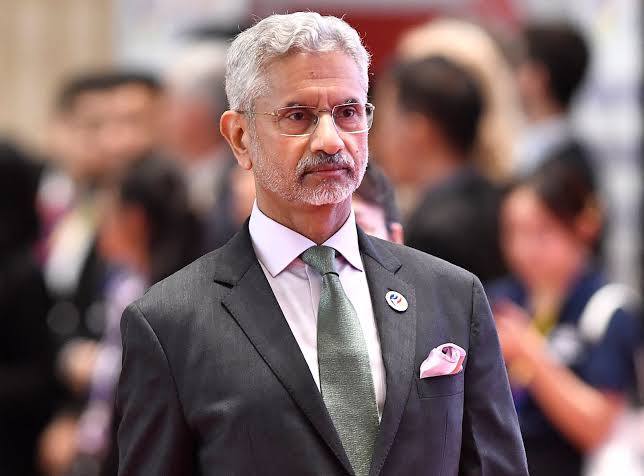
Indian External Affairs Minister S. Jaishankar met U.S. Secretary of State Marco Rubio in Manila on Wednesday for wide-ranging discussions on trade, tariffs, energy, defence, critical minerals, artificial intelligence and regional security.
The meeting took place on the sidelines of the Association of Southeast Asian Nations (ASEAN) foreign ministers' meetings and the Quad foreign ministers' meeting in the Philippine capital. Sharing details of the meeting on social media, Jaishankar said the discussion focused on areas that are a priority for the India-U.S. Comprehensive Global Strategic Partnership, including trade and tariffs, energy, defence and security, critical minerals and artificial intelligence. He also noted that the two leaders exchanged perspectives on regional, global and multilateral issues of mutual interest.
Rubio reaffirmed the Quad's commitment to the Indo-Pacific and ASEAN. He stated that the United States, India, Australia and Japan share a vision of a free and open Indo-Pacific grounded in the rule of law, sovereignty and territorial integrity. The Quad remains a priority, with plans to meet again later this year.
The two leaders also exchanged views on the ongoing West Asia crisis and its impact on global energy supplies and market stability. Jaishankar's visit to Manila is part of a two-day trip to participate in a series of ministerial meetings under the ASEAN framework, including the ASEAN-India Foreign Ministers' Meeting, the East Asia Summit Foreign Ministers' Meeting and the ASEAN Regional Forum.
According to India's Ministry of External Affairs, the visit reflects India's continued engagement with ASEAN under its Act East Policy and its commitment to strengthening the ASEAN-India Comprehensive Strategic Partnership. Discussions at the Quad meeting are expected to focus on regional security, maritime cooperation, emerging technologies and developments in the Indo-Pacific.
The meeting between Jaishankar and Rubio underscores the deepening strategic partnership between India and the United States, as both countries seek to navigate an increasingly complex geopolitical landscape. The focus on critical minerals and artificial intelligence highlights the growing importance of technology and resource security in the bilateral relationship, while the discussions on regional security and the Quad reflect shared concerns about stability in the Indo-Pacific.