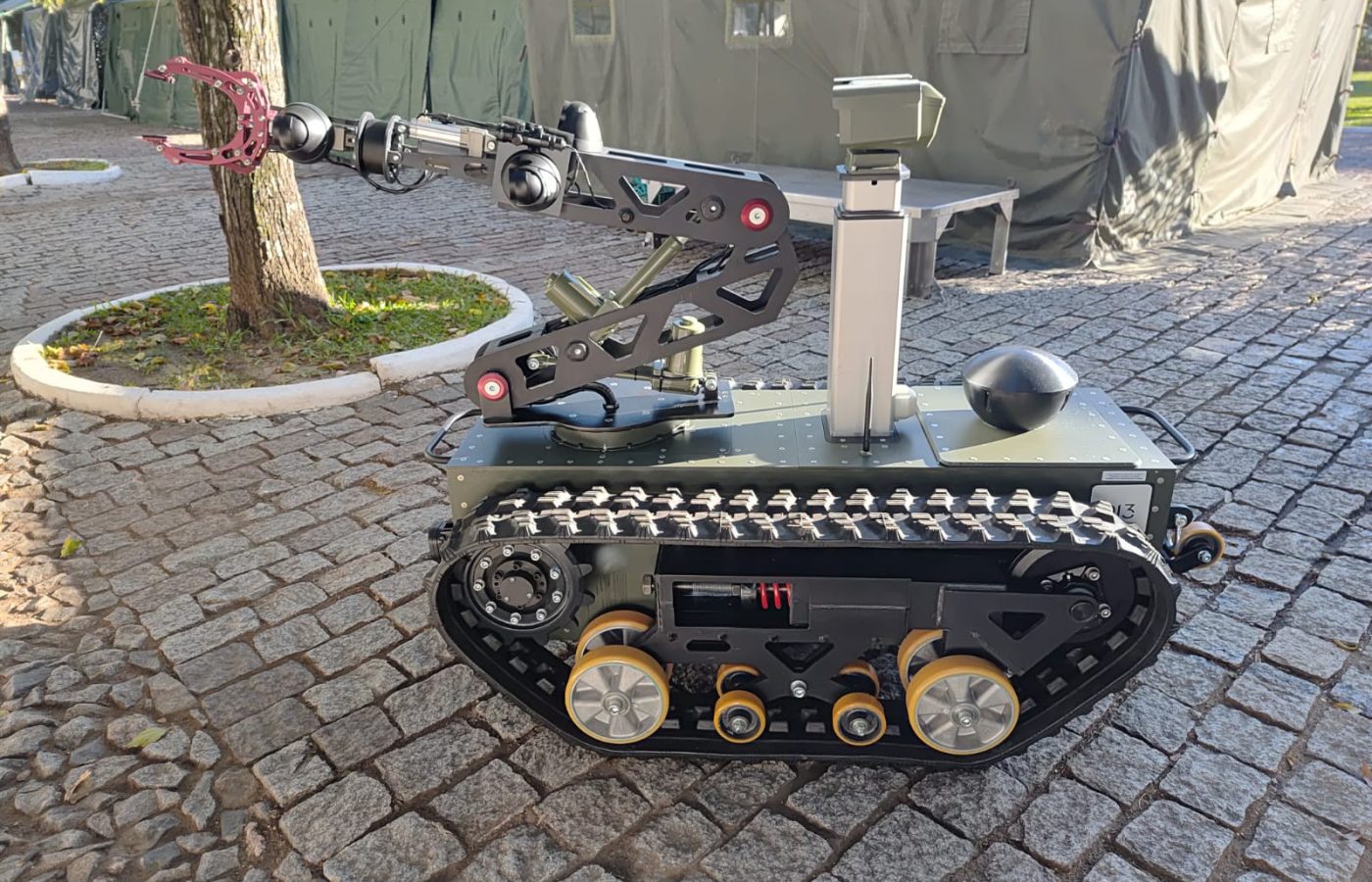
The Brazilian Army has added a nationally manufactured explosive-ordnance neutralization robot to its engineering and security capabilities. The acquisition was carried out through the Department of Engineering and Construction, with the equipment produced by Ambipar Robotics.
The system is intended to keep personnel farther from explosive threats during field operations. In practical terms, the robot gives explosive-disposal teams a remotely operated tool for tasks that would otherwise expose specialists to higher levels of direct danger.
The acquisition is also tied to Brazil's preparation for missions abroad. The robot is meant to help meet requirements linked to the United Nations Peacekeeping Capability Readiness System, which defines conditions for the readiness of troops assigned to international deployments.
The procurement process was led by the Directorate of Engineering Material and received technical support from the Defense, Industry and Academy System. That framework connects the military sector, academic institutions and the corporate market in projects aimed at strengthening the national defense industrial base.
The platform is described as multifunctional and suitable for several operating environments. Its expected uses include United Nations missions, conventional military operations, humanitarian assistance and subsidiary support to security activities.
For the Army's land force, the incorporation of the robot is part of broader planning around logistics and operational capacity. Its immediate value lies in adding a technological layer to security and engineering work, especially where explosive hazards can limit movement, delay operations or increase the risk to trained personnel.