Egypt's foreign minister Badr Abdelatty has warned that the Middle East cannot be reorganized through unilateral designs, arguing that developments since 7 October 2023 have shown the limits of projects based on coercion, dominance or the redrawing of political boundaries by force.
Abdelatty said any future regional order must be built on consensus among the countries of the region, including its principal powers. In his view, military or political weight alone cannot allow one state to impose its will on others or determine the structure of the region without broader acceptance.
His remarks came in response to questions about rhetoric surrounding a “Greater Israel” and wider proposals to reshape the Middle East. Abdelatty rejected the viability of any project based on one country's unilateral vision, saying durable arrangements must arise from the collective preferences of regional states.
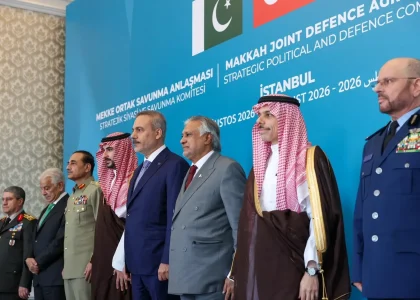
The Egyptian minister also addressed discussion of a possible consultative grouping involving Egypt, Saudi Arabia, Turkiye and Pakistan. He described that format not as a formal military or political alliance, but as a platform for consultation, coordination and alignment on major regional questions.
Abdelatty said the mechanism would focus on cooperation among the four countries and on coordination over issues such as the implications of a possible Iran-Israel conflict, continuing diplomatic negotiations and the shape of post-conflict arrangements in the region.
He added that Egypt is also working closely with Saudi Arabia, the United Arab Emirates and other members of the Gulf Cooperation Council to develop a common Arab and regional vision for the Middle East's future. Participation in those consultations, he said, could remain open to other regional countries that support the agreed principles and objectives.