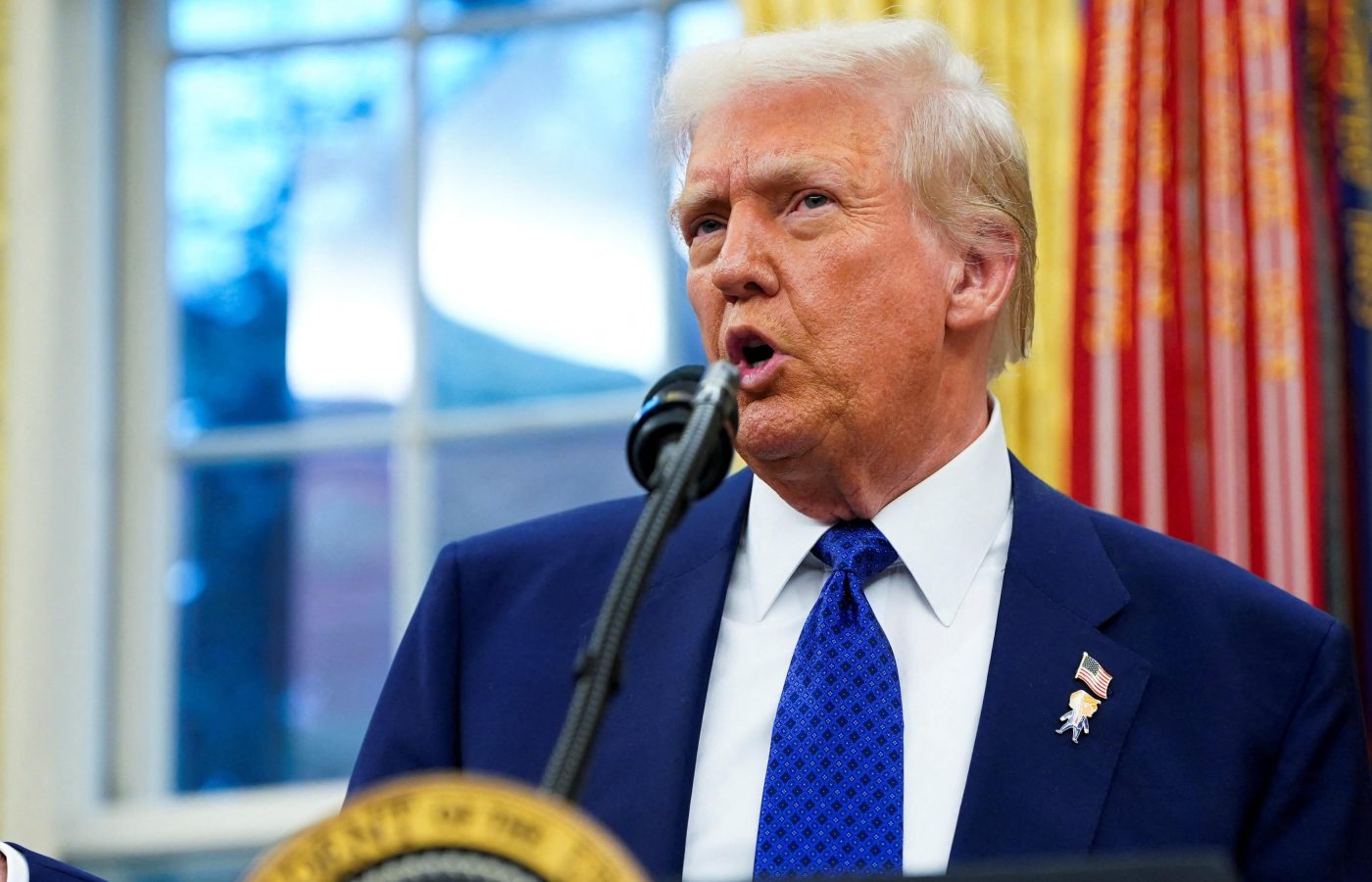
US President Donald Trump said Russian President Vladimir Putin wanted to reach an agreement ending the war in Ukraine. Trump based that assessment on a telephone conversation held earlier in the week, which he described positively while speaking to journalists on September 9.
Trump added that an agreement would also require Ukrainian President Volodymyr Zelenskiy to be willing to make a deal. His statement presented consent by both leaders as the essential condition, but did not identify the terms, concessions or timetable required for a settlement.
The remarks came before Trump boarded Air Force One for Dallas, where he was traveling to the Republican National Convention. The setting turned an update on international mediation into part of the president's public political message before a major party event.
Trump had spoken with Putin on Tuesday, shortly after US special envoy Steve Witkoff and presidential relative Jared Kushner returned from visits to Moscow and Kyiv. The two negotiators discussed possible proposals intended to bring the fighting to an end.
The diplomatic effort also included a meeting in Moscow the previous month between CIA Director John Ratcliffe and Russian intelligence officials. Part of that contact was intended to encourage Russian decision-makers to end the invasion, adding an intelligence channel to the political negotiations.
Despite Trump's account, intelligence officials in the United States, Ukraine and several European countries continued to question whether Putin was seriously interested in ending the conflict. Their doubts highlighted the gap between the president's personal assessment and the institutional judgment surrounding the talks.
Trump described the principal obstacle as the personal hostility between Putin and Zelenskiy, saying the two leaders hated each other. That explanation reduced the impasse to their relationship, while the available negotiations had not yet produced an announced agreement or demonstrated that the parties had resolved substantive differences.